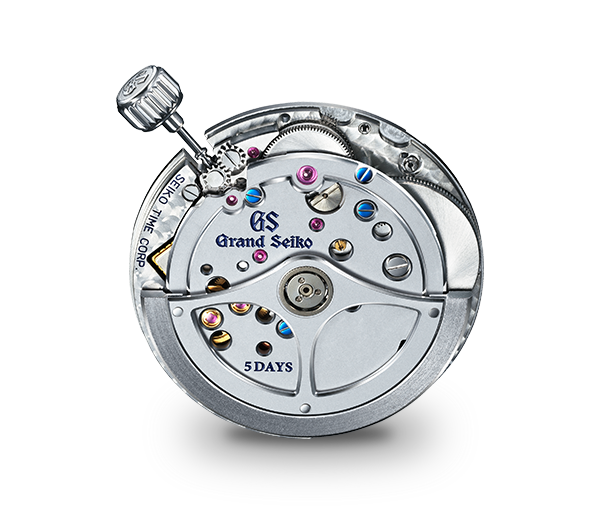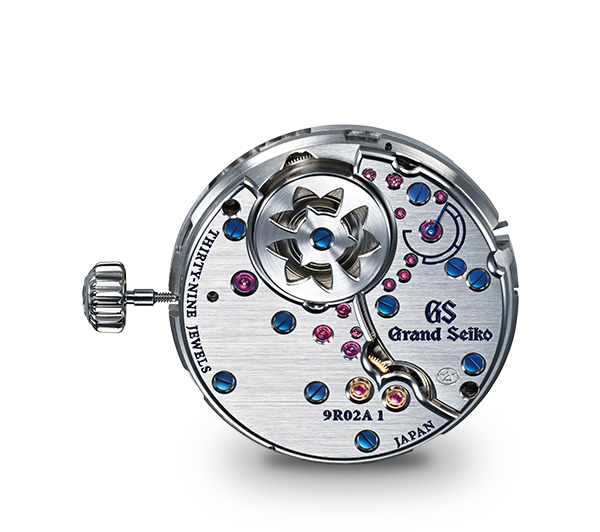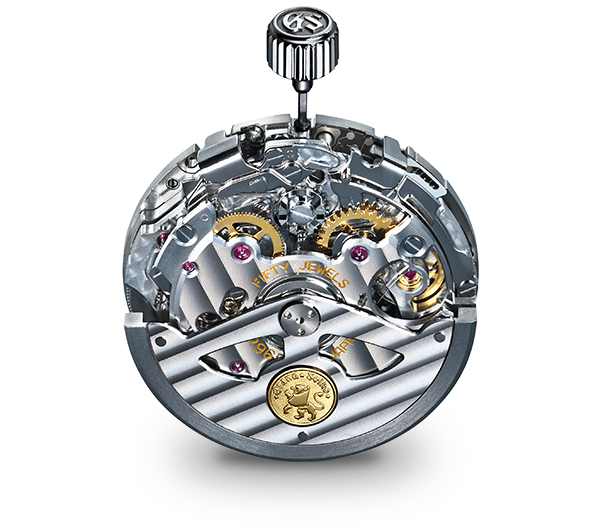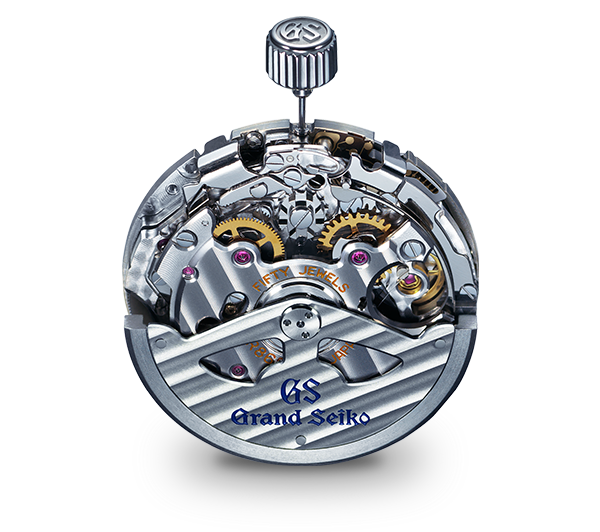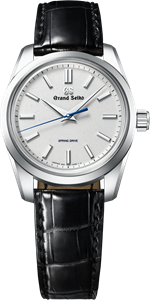
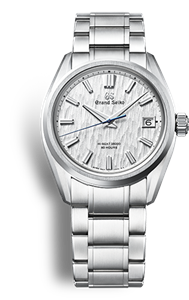

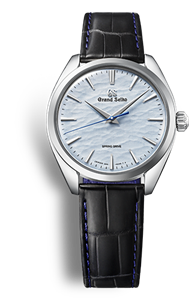
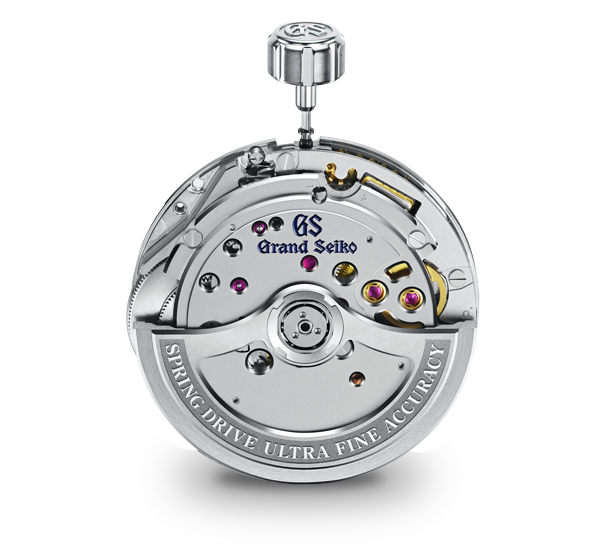
Spring Drive U.F.A. Automatic
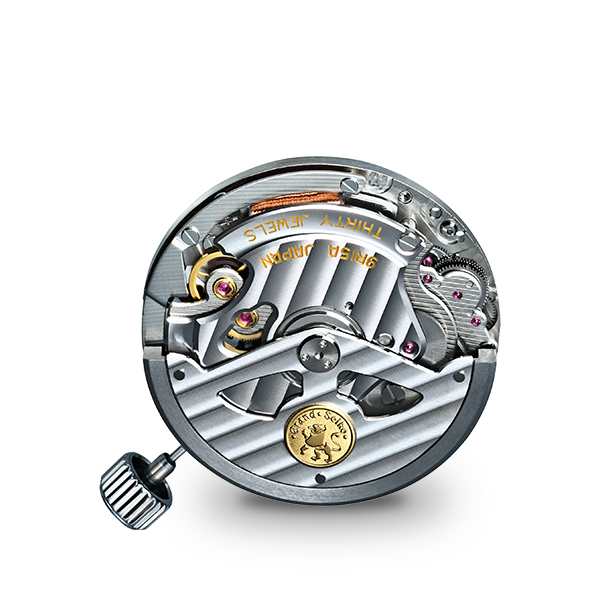
Calibre 9RB1
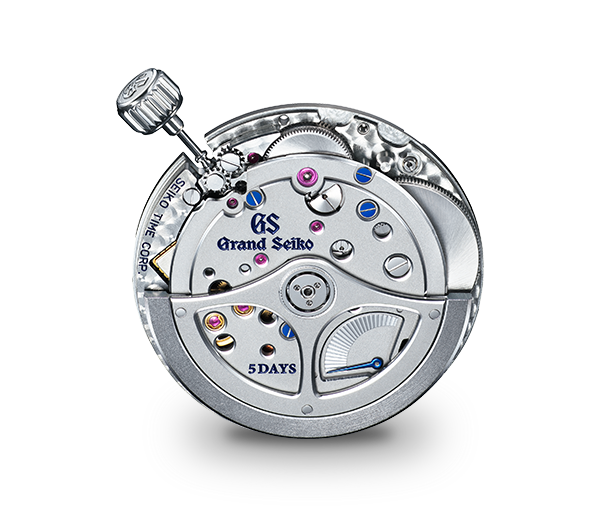
The pursuit of high accuracy has always been the cornerstone of Grand Seiko’s values. Presented in 2025 as the first movement to receive the then-new U.F.A. designation, which stands for “Ultra Fine Accuracy,” Calibre 9RB2 boasts a level of precision defined not by accuracy in seconds per day, week, or month, but by accuracy over one year. The movement’s astounding annual rate of ±20 seconds, or approximately ±3 seconds per month, set a new standard among wristwatch movements powered by a mainspring*.
*As of April 2026, based on Grand Seiko’s research.
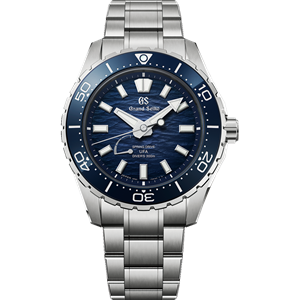
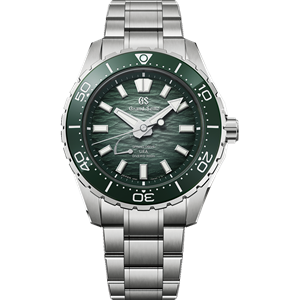
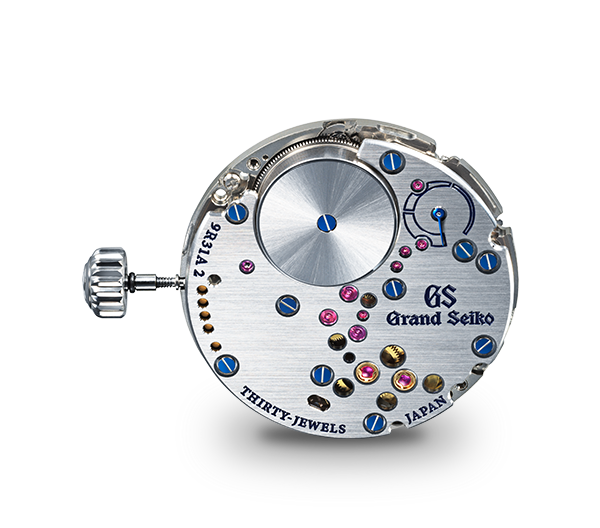
While the Calibre 9RB1, introduced at Watches and Wonders Geneva 2026, shares many of the same attributes as the earlier Calibre 9RB2, its power reserve indicator is located on the dial side.
Spring Drive uses the properties of a crystal that vibrates at a constant frequency to measure the passage of time. Due to external factors such as temperature changes, humidity, and gravity, as well as long-term use, the frequency of the crystal oscillator changes, resulting in tiny errors. Over time, they may cause a slight deviation in accuracy.
The ±20-seconds-per-year accuracy of Calibre 9RB1 is achieved through the manufacturing and processing methods for the in-house, three-month-aged quartz oscillator and a temperature-compensating IC. Furthermore, by incorporating a regulation switch, any deviations in accuracy due to aging after assembly can be easily accounted for and corrected.
Specifications
| Winding mechanism | Automatic with manual-winding |
|---|---|
| Accuracy | ±20 seconds per year (±3 second per month) |
| Power reserve | Approximately 72 hours (3 days) |
| Number of jewels | 33 jewels |
| Features | -Power reserve indicator
-Hacking function |
A vacuum-sealed package consisting of a carefully selected crystal oscillator
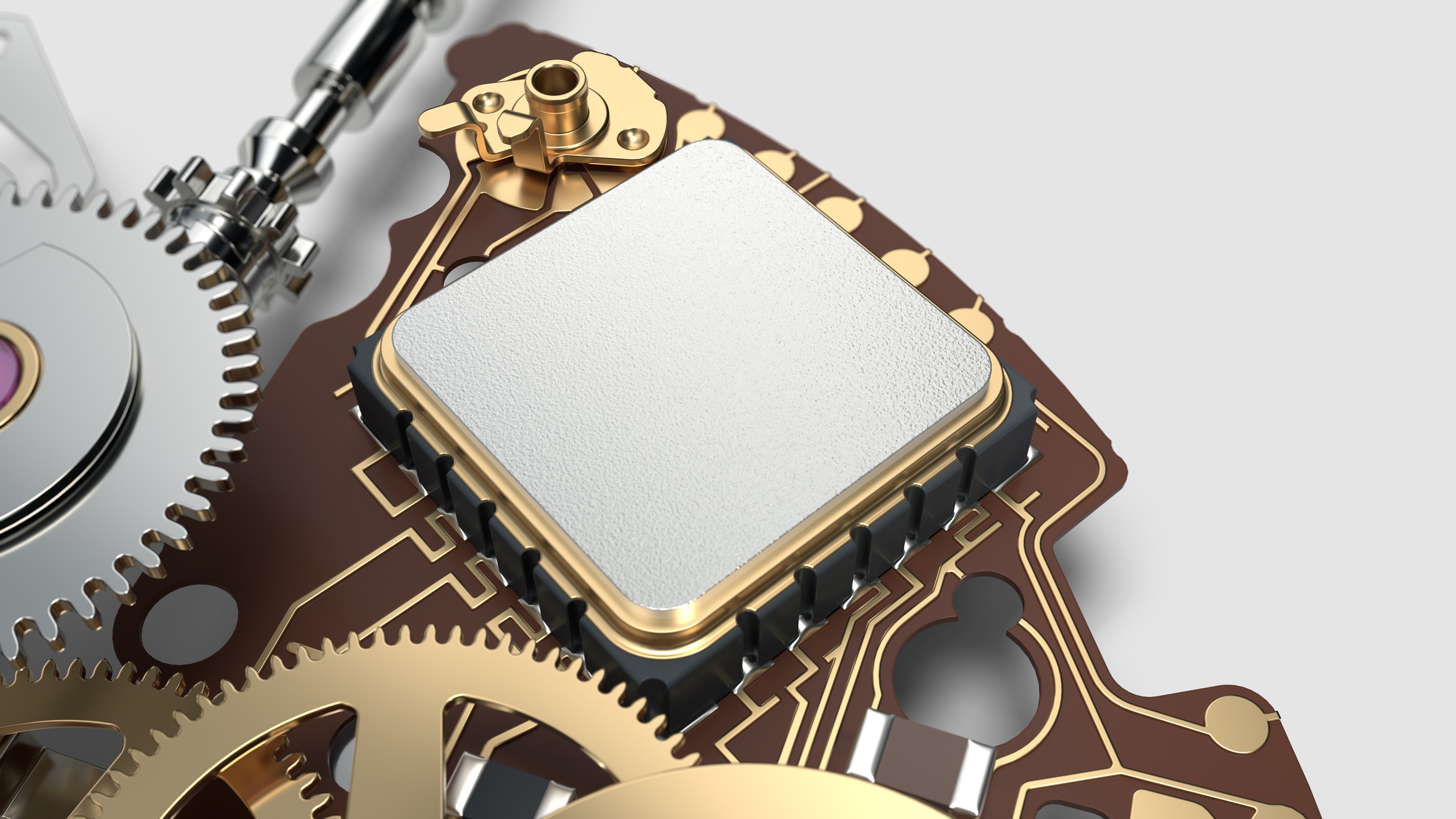
As with the 9RA series of movements, Calibre 9RB1 relies on a three-month ageing process for its quartz oscillators and a temperature-compensating ultra-low-power IC, in which both the oscillator and sensor are vacuum-sealed to minimise temperature differences. The frequency of each individual quartz oscillator is measured at several different temperatures after the movement is cased up into the watch, with the resulting data necessary for thermo-compensation programmed into the low-power IC. Since the oscillation of a crystal oscillator is susceptible to temperature fluctuations, Calibre 9RB1 uses a temperature sensor located within its special silicon-on-insulator IC (SOI-IC) to collect temperature data 540 times daily, determine the influence of temperature changes within the IC, and compensate for variations in the oscillator’s performance. Furthermore, placing both the crystal oscillator and the IC within a single, vacuum-sealed package eliminates temperature differences between the IC and the crystal oscillator, allowing for highly precise temperature adjustments. Installing all the wiring connecting the crystal oscillator with the IC within the vacuum-sealed package also prevents changes in humidity from influencing the movement, in addition to shielding the IC from the influence of static electricity and light.
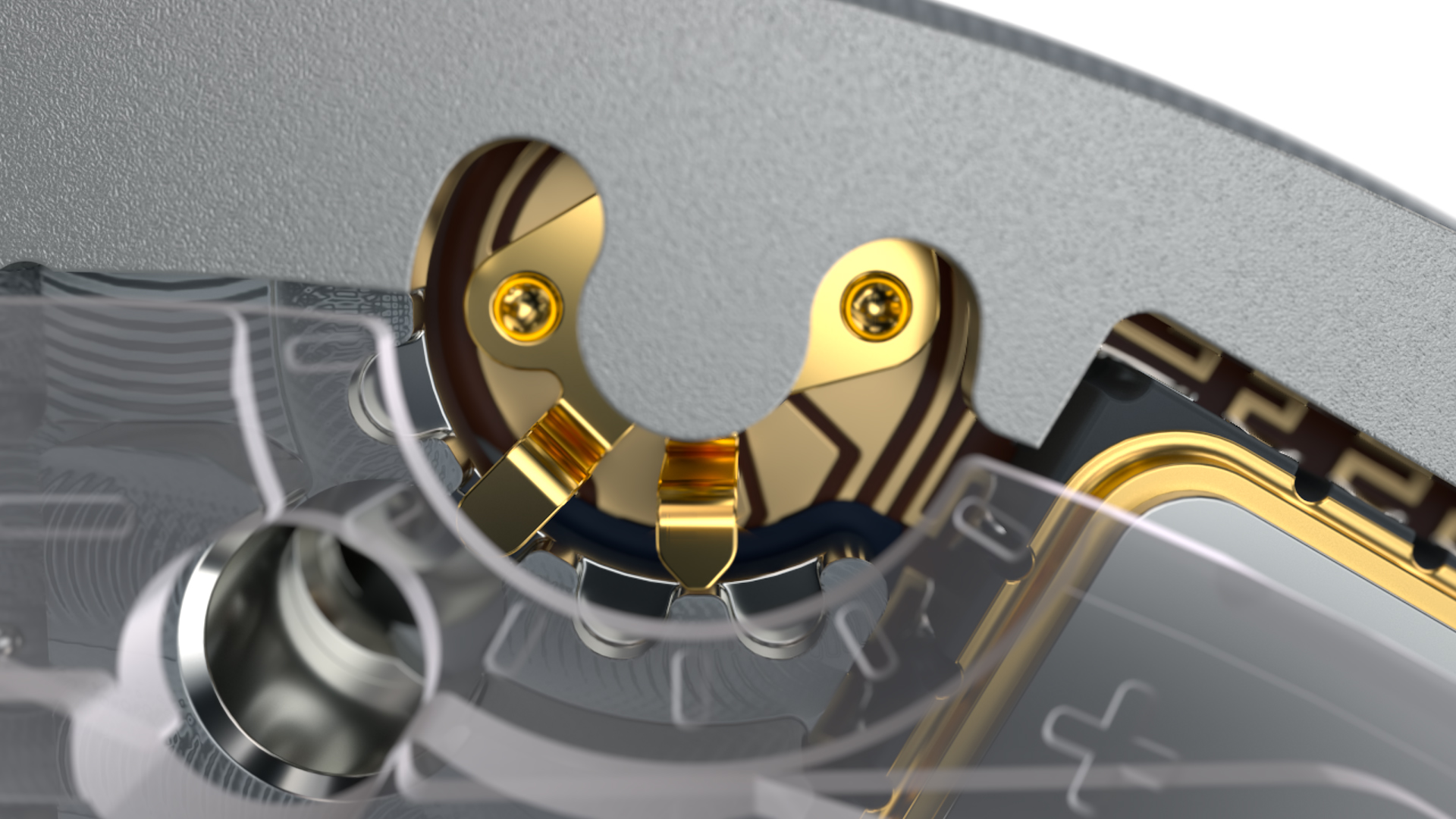
A Spring Drive movement with a regulation switch
By understanding the characteristics caused by the slight strain that remains after the crystals are artificially aged in house, it became possible to compensate for subtle deviations in vibration frequency that come with ongoing ageing. The movement features a regulation switch that can be used during after-sales service to correct any divergences in accuracy that may be caused over long periods of use.
Achieving high accuracy and a compact design
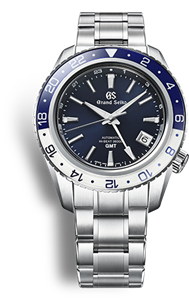
To create a movement with a low center of gravity, which in turn enhances the watch’s comfort, a single, thin barrel and the Magic Lever with crank wheel, offset from the centre of the movement, have been adopted. The movement maintains its low center of gravity while simultaneously ensuring a power reserve of approximately 72 hours, and just like the 9RA series, its strength and durability are ensured by the One-piece Centre Bridge. Thanks to the movement’s compact design, Grand Seiko was able to create its smallest diver’s watch of any kind, with a case diameter of just 40.8 mm.
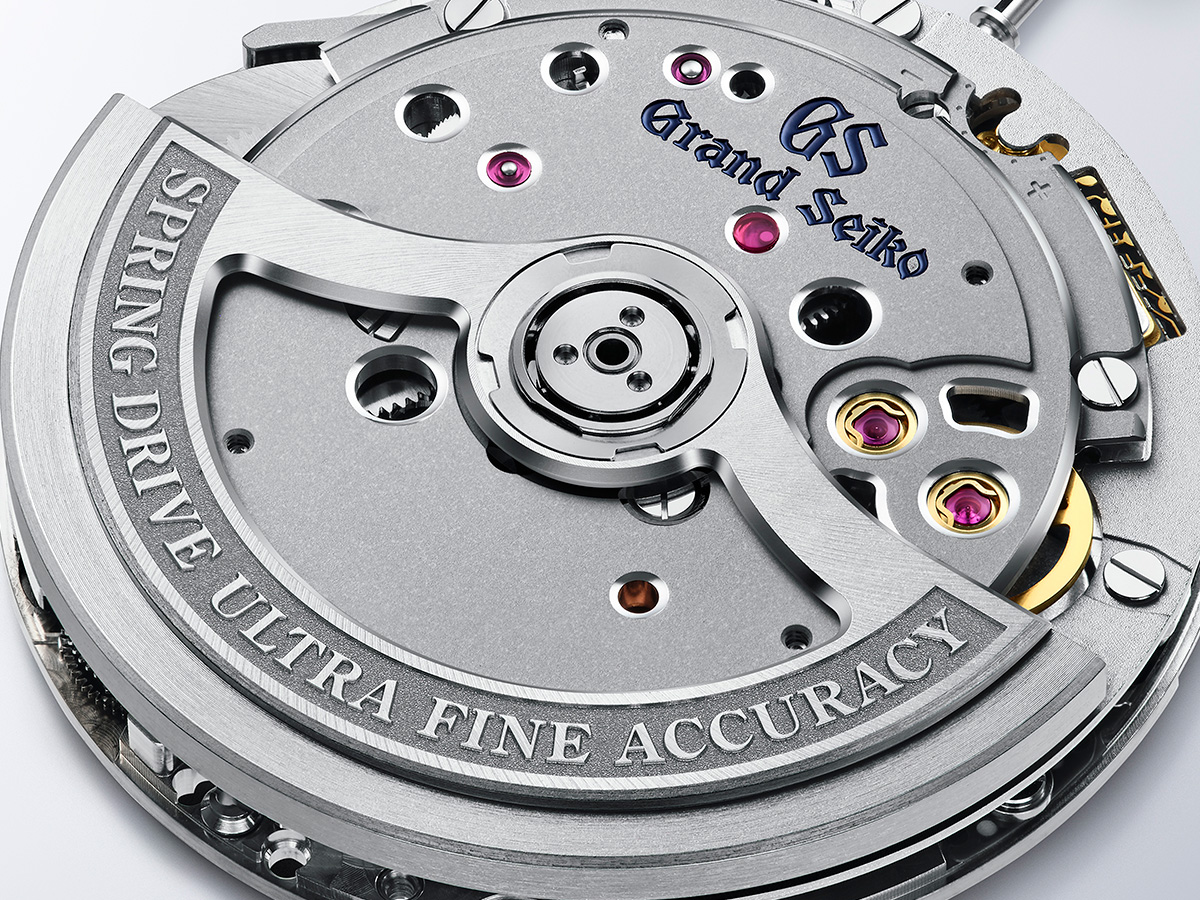
Movement finishing reflecting the natural beauty of Shinshu
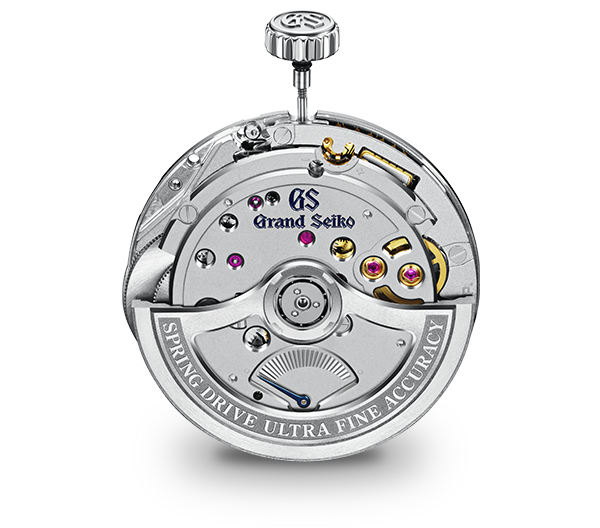
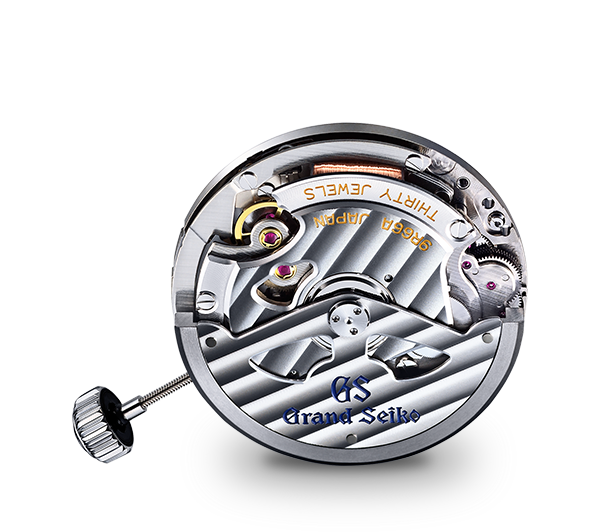
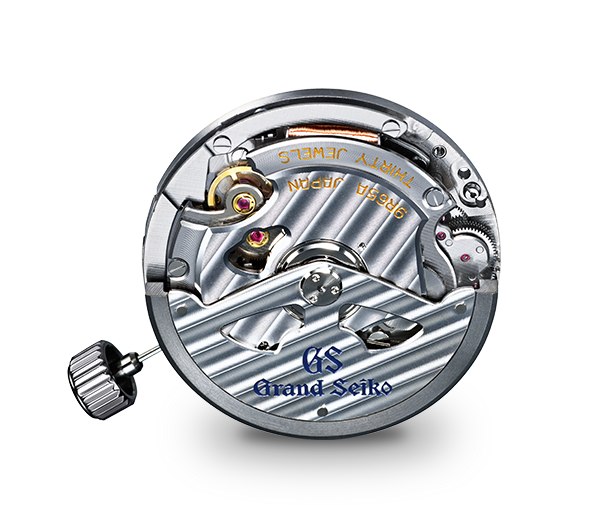
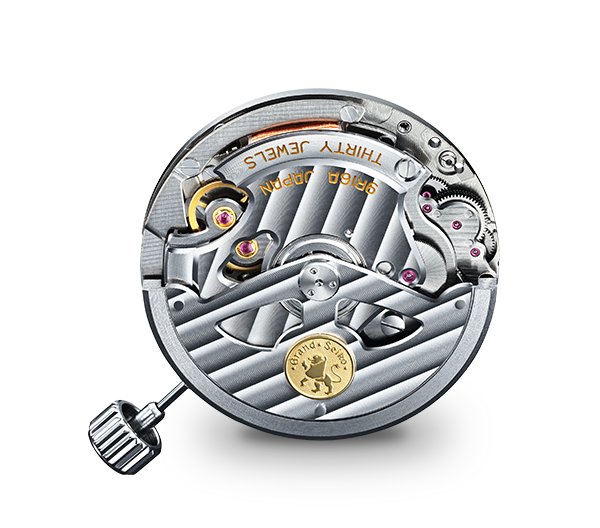
The exterior of Calibre 9RB1 is meticulously finished and reflects the natural beauty of its birthplace, Shinshu, an area more commonly known today as Nagano Prefecture. The design itself draws inspiration from the gentle frost that covers the trees during the severe winters of this mountainous region. An eye-catching feature of these frosts is the hypnotic, all-encompassing glow emitted from the layer of frost due to its peculiar, rugged texture. The movement’s bridge design represents the frost and is finished with a neutral-toned sandblast coating that achieves a calm but elegant radiance. The edges of the bridge emit a sharp glow with light captured from any direction, accenting the design with a vivid and profound brilliance. The oscillating weight is designed with the engraving "Ultra Fine Accuracy".

What makes 9R Spring Drive special?
Spring Drive, one of the great innovations in modern watch making history, regulates a spring-driven movement with state-of-the-art electronic technology that functions without batteries or other external power source. Its sole power source is a mainspring, which drives a series of gears. A rotor, connected to the end of these gears, generates a small electrical charge that activates an electronic circuit and quartz oscillator. Its accuracy is unprecedented for a watch wound by a mainspring. The development of the 9R Spring Drive movement was possible only because Grand Seiko is one of the few manufacturers with expertise in both mechanical and electronic watches.