
04Heritage & Innovation


At the foundation of Grand Seiko lies an elegant fusion of heritage and innovation. Such essential craftsmanship, passed down over the generations, provides a glimpse into a sense of beauty that is unique to the Japanese people. This foundational spirit endures as a constant quest for improvement through new expressions. This spirited mix of the traditional and the new transcends any specific era, and deeply resonates among creators dedicated to true craftsmanship.

Calligraphy artist
Daichiro Shinjo
Daichiro Shinjo lives on Miyakojima Island, at the southern tip of Japan. Here he has come to enjoy global renown as a contemporary calligrapher. His works infuse a unique mix of the teachings of his grandfather, who was a Zen Buddhist monk, the culture of Miyakojima, and other diversified elements. As a result, Shinjo’s activities have never been limited to the avenues of his own personal expression, but rather reach across numerous fields.
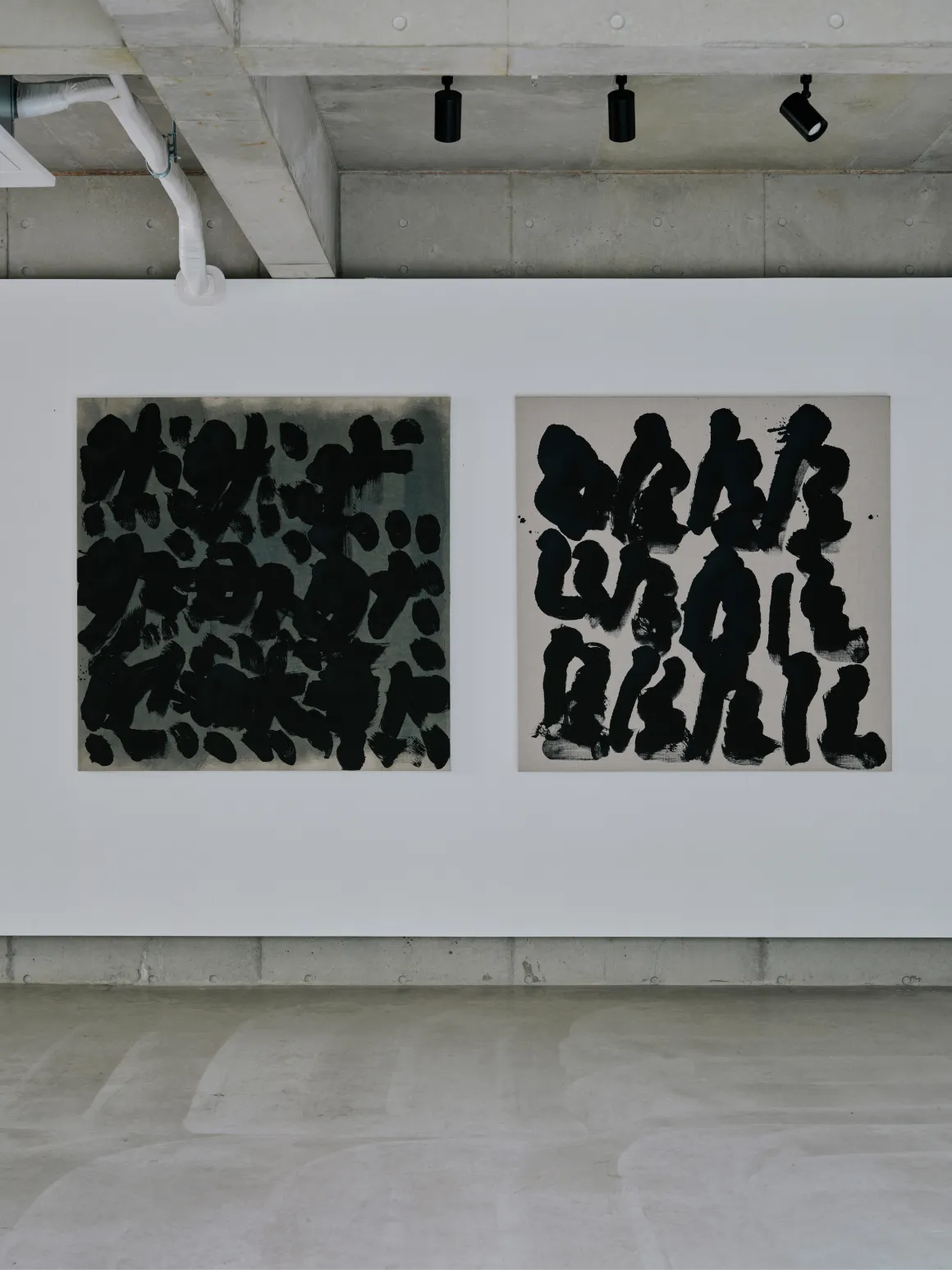
The canvas dyed with Ryukyu indigo on the left side features the character Nen, while the character Ji appears on the canvas to its right. Placed side by side in this way, they form a work known as Jinen, which means “Things as They Are.” It stands as a defining motif in Shinjo’s cosmos.
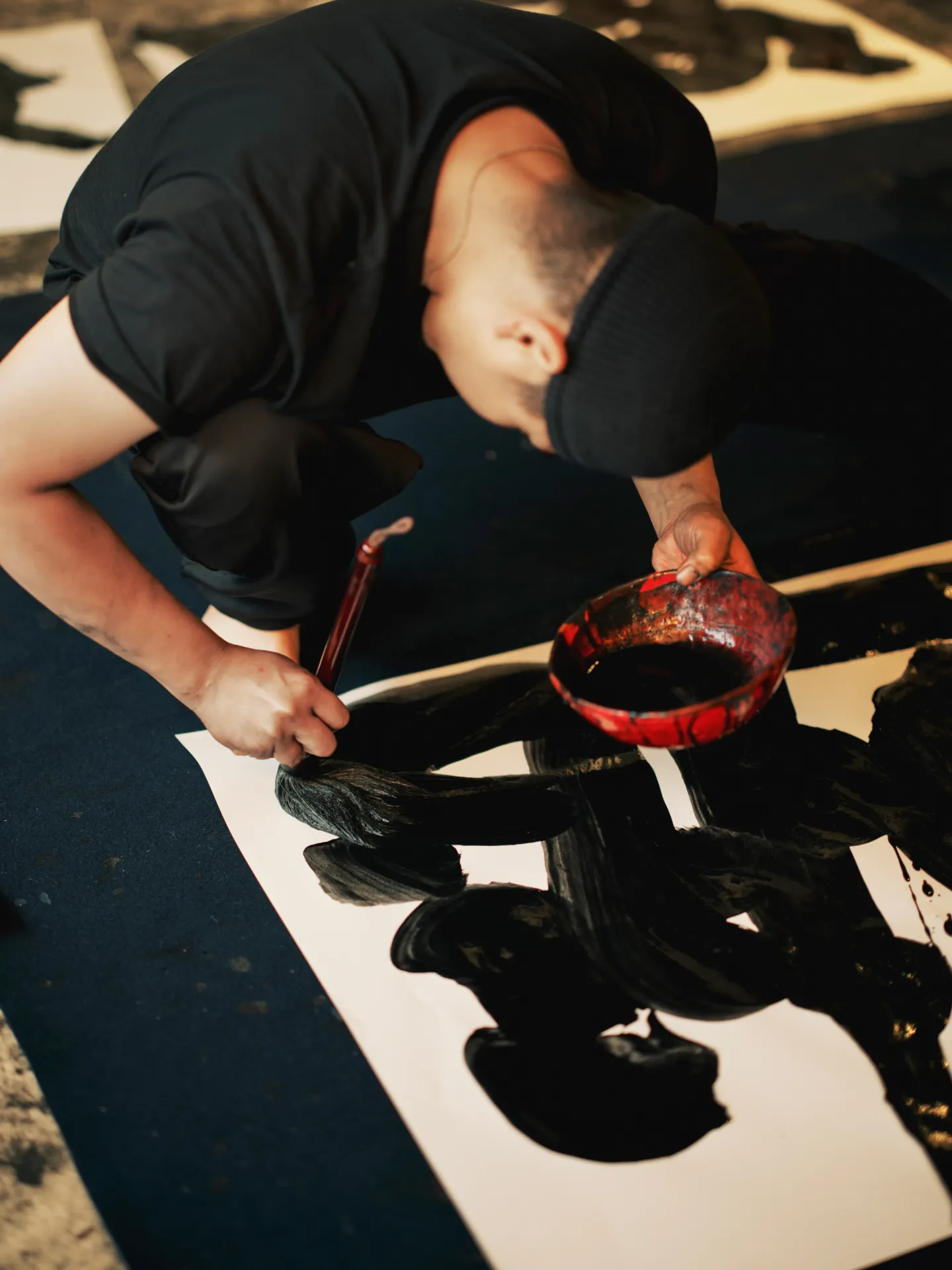
Tradition is where we come back to.
It gives us the strength to take on a challenge.
With calligraphy as my base, I continue to mobilize traditional techniques and materials. In this way, the presence of classics as a homebase to which I can always return paves the way to trying out new expressions yet to emerge in my mind.
In my view, calligraphy is the art of time. My works are not limited to the realm of traditional Japanese paper. I also use Western canvases to write letters multiple times in layers. My ambitions reach beyond the instantaneous beauty of writing letters just once. Instead, by repeating those images, I strive to instill accumulations of the shifts in mindset and the element of time in my work. Herein lies the reason for the use of canvases in my creations.
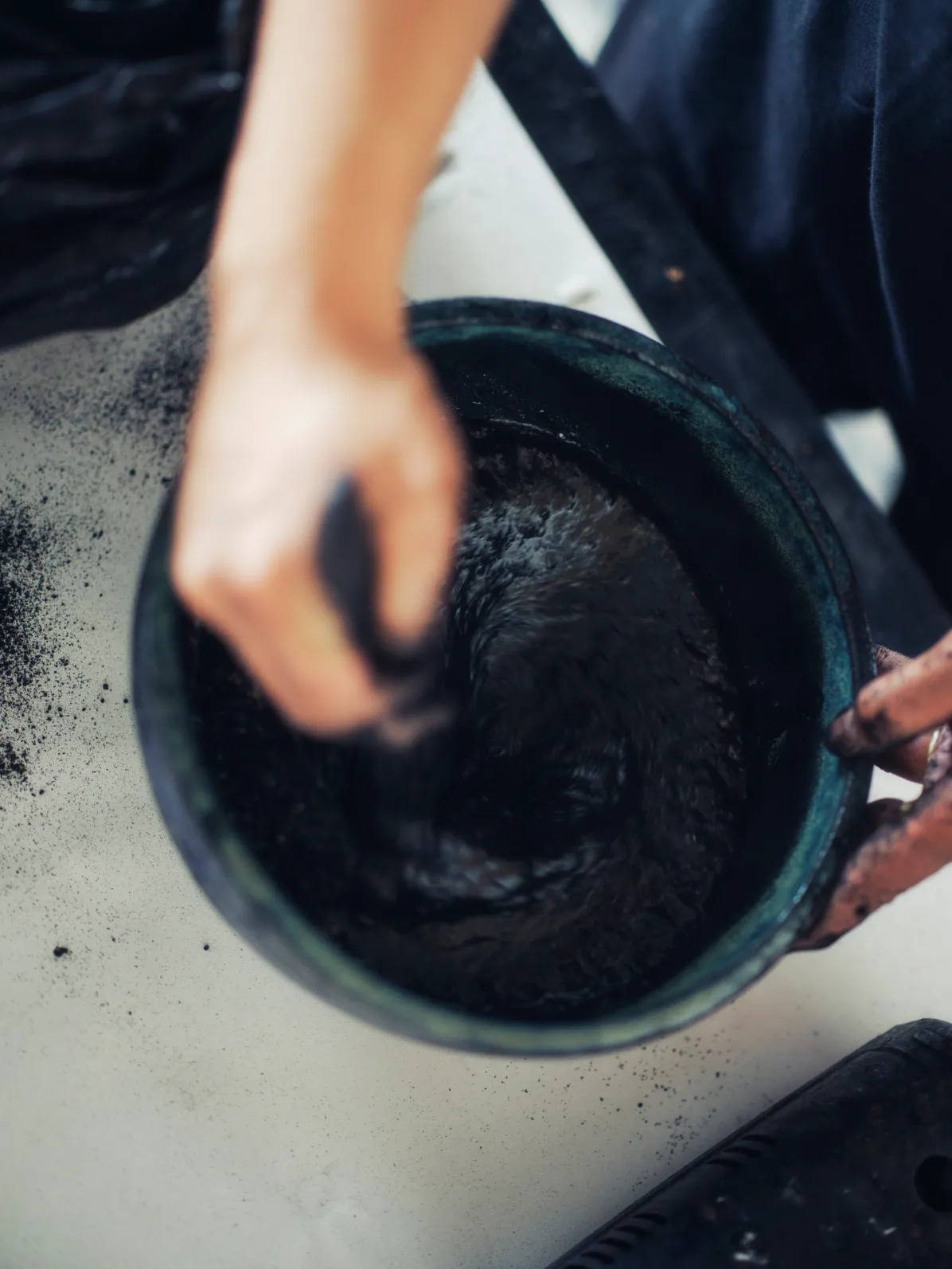
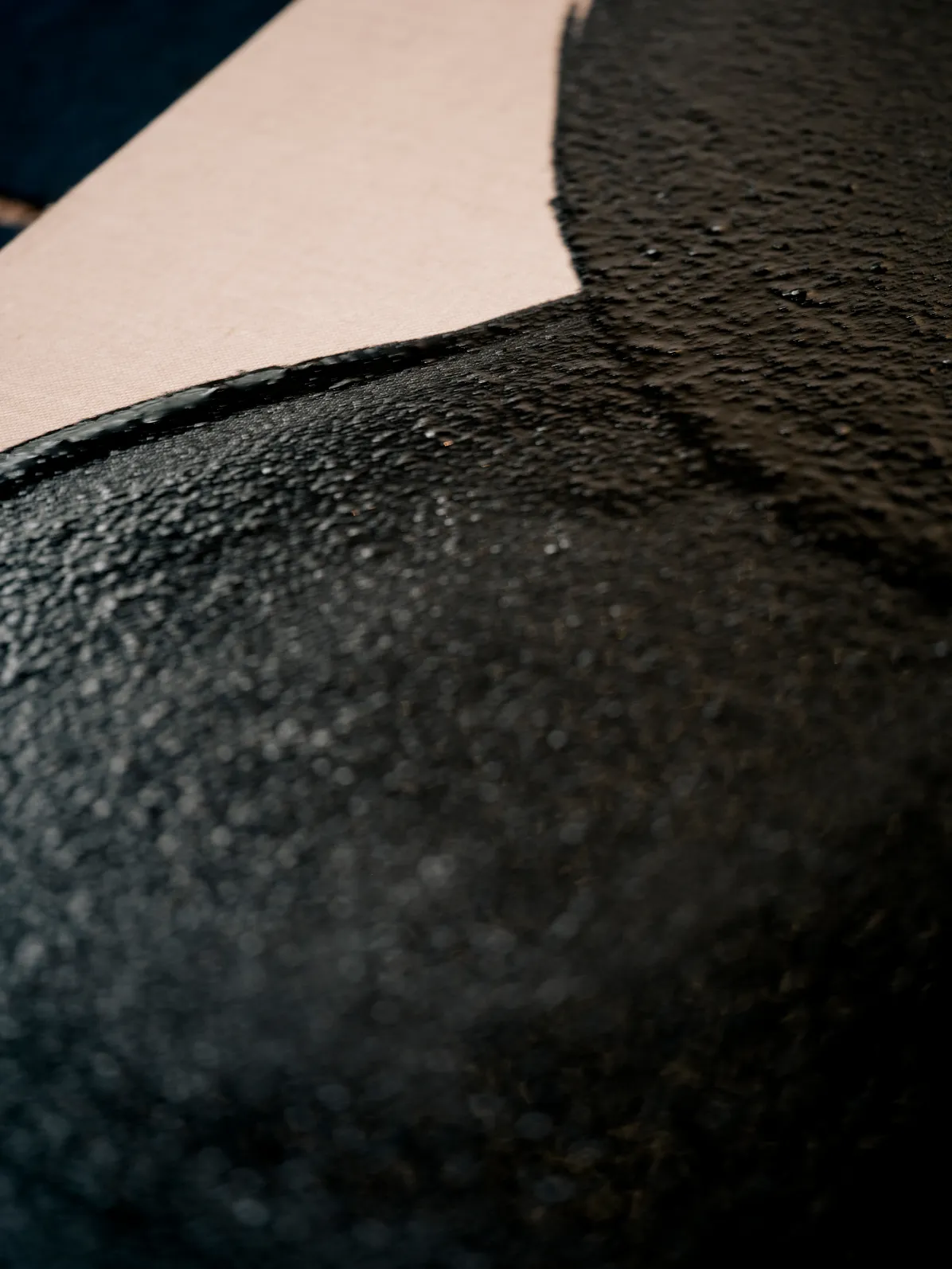
There is a Zen teaching that enlightenment cannot be expressed in words or letters. In fact, we constantly need to question the meaning of such written words while recognizing the importance of values passed down over the years. I believe, in fact, that such skepticism paves the way to new expressions. My grandfather compiled a record of the spiritual culture and festivals of Miyakojima. In the midst of an ever-changing society, he set his sights on continuing to probe if there were also elements which have refused to change. This stance has also spawned my current approach to expression.
While the shape of the island remains unchanged, there are ongoing transitions in the age, the culture in which we live. My goal is to continue to search out universal essentials within the dimension of that change. In my view, the act of carrying on tradition does not mean protecting the past, but rather renewing values within the realm of time.
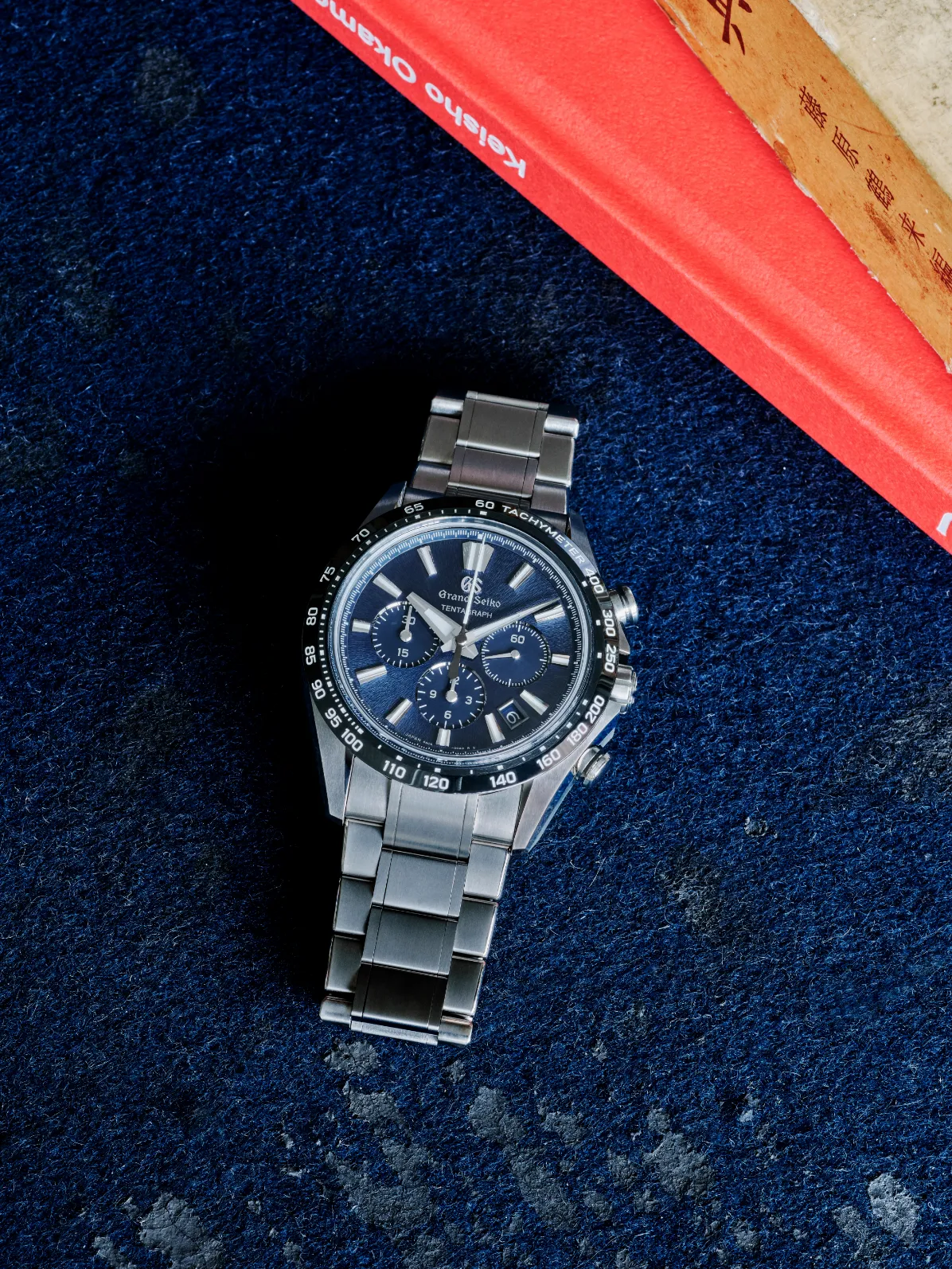
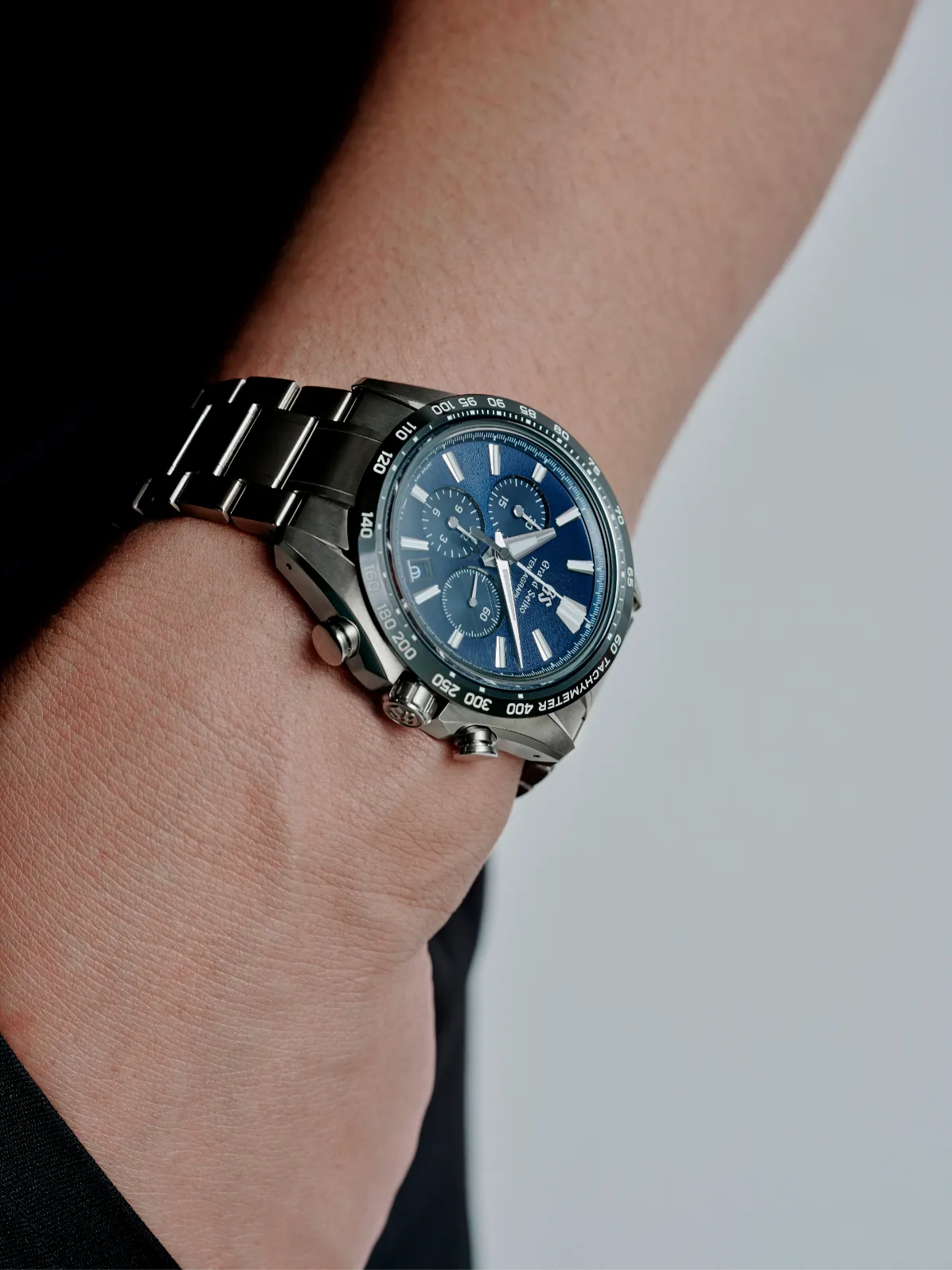
The SLGC001 rests on a table in Shinjo’s workshop. Its dial is crafted in a pattern used to convey the slopes of Mt. Iwate. The watch uses a state-of-the-art mechanical chronograph movement, enhancing the powerful presence of this distinctive timepiece.
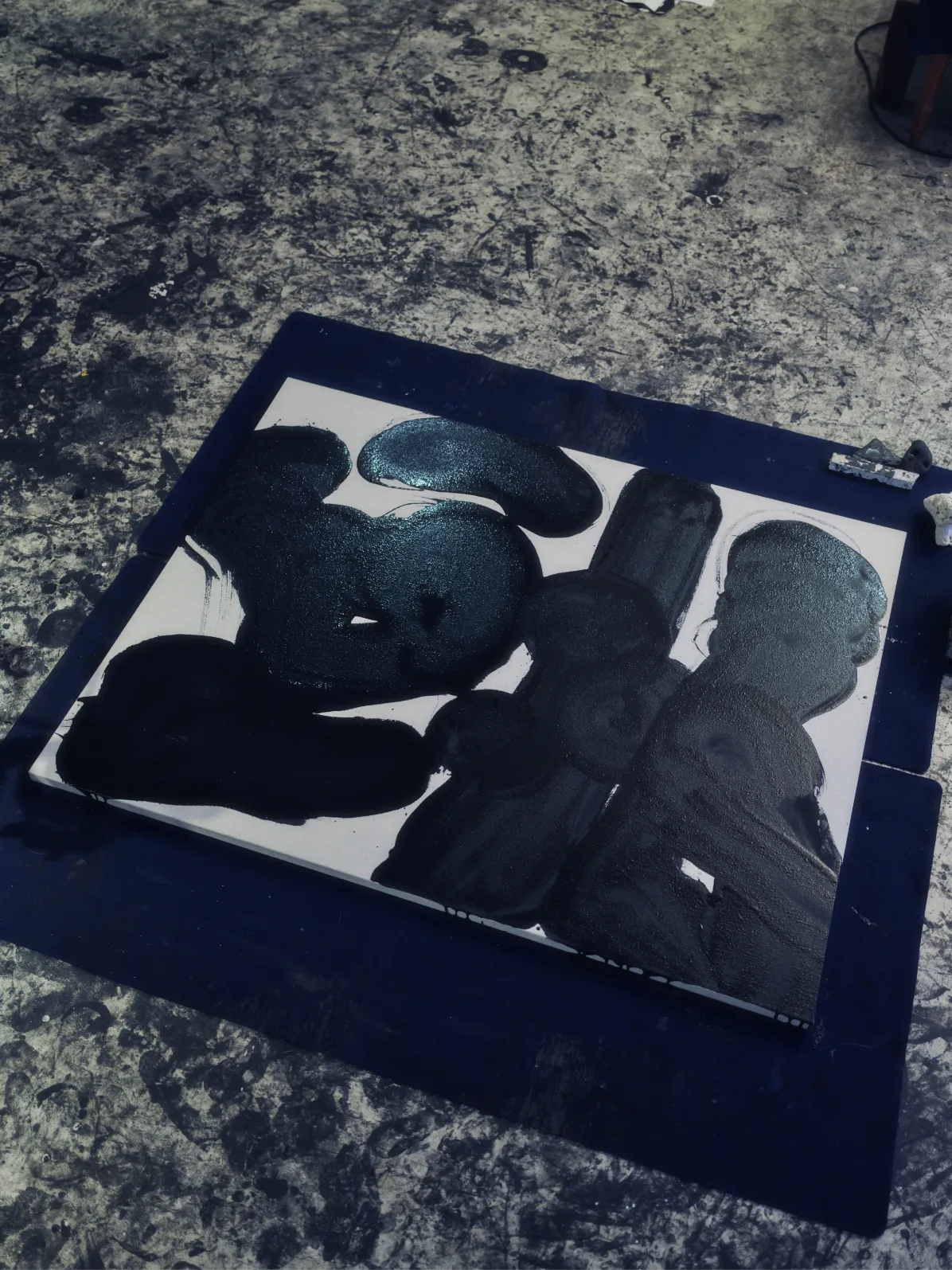
This calligraphic work was created by Daichiro Shinjo during our photo shoot. A new word, “nene,” emerged – created by Shinjo himself – during the course of the interview.
The first ne in this word refers to circulation, while the second seeks to convey points of origin, or linkage. The idea is to underscore the time and cycles through which all things circulate while connecting together.
Calligraphy artist
Daichiro Shinjo

Metalwork artist
Naho Kamada
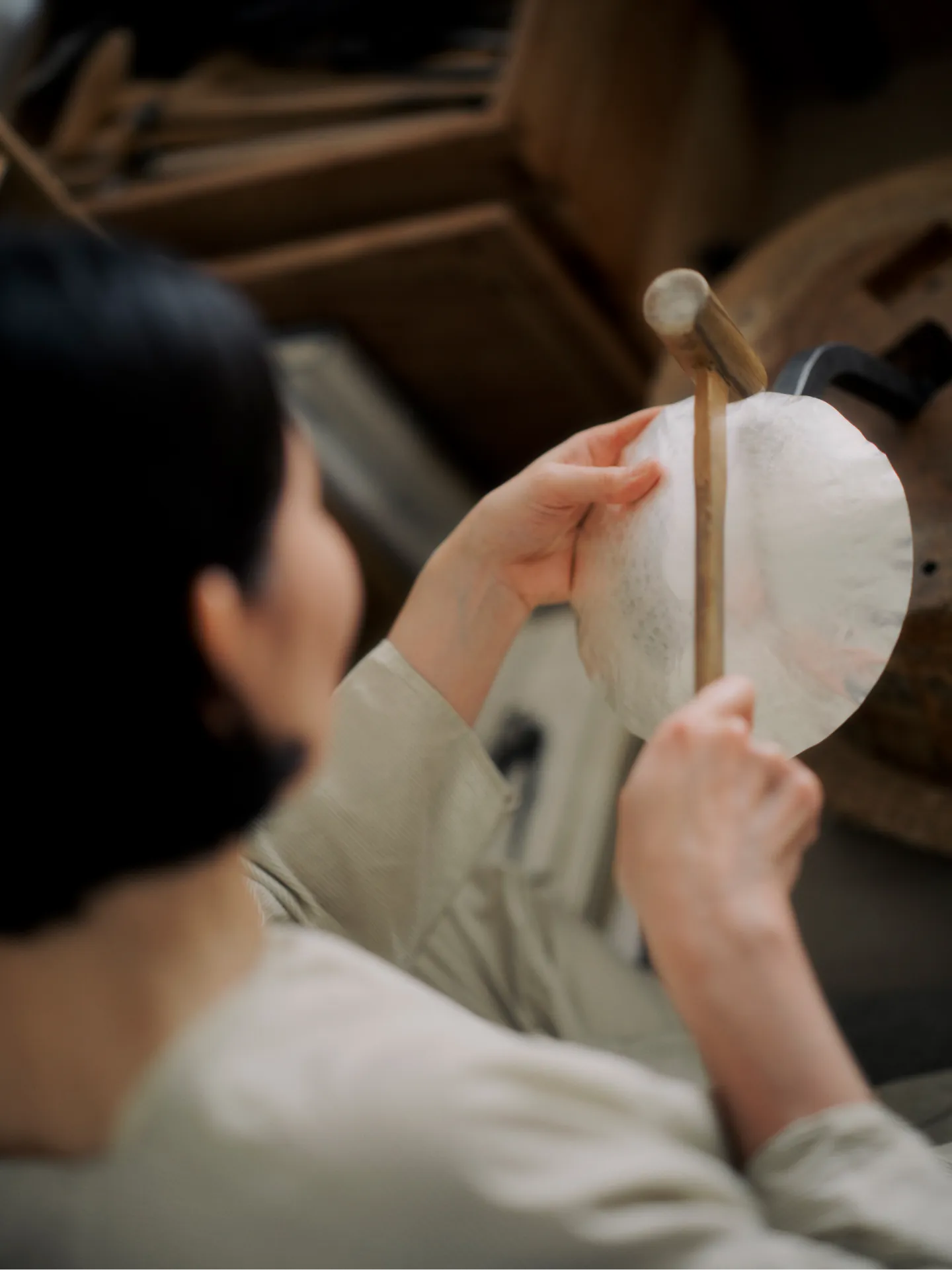
Studying under metal artist Takejiro Hasegawa, Naho Kamada learned traditional techniques, while cultivating the spirit of free expression. Through her endeavors in silverware, tea utensils and cutlery, Kamada brings classical techniques into contemporary life. By pursuing beauty deepened by changes created through the passage of time, she has continued to enhance the charm of her works over the years.
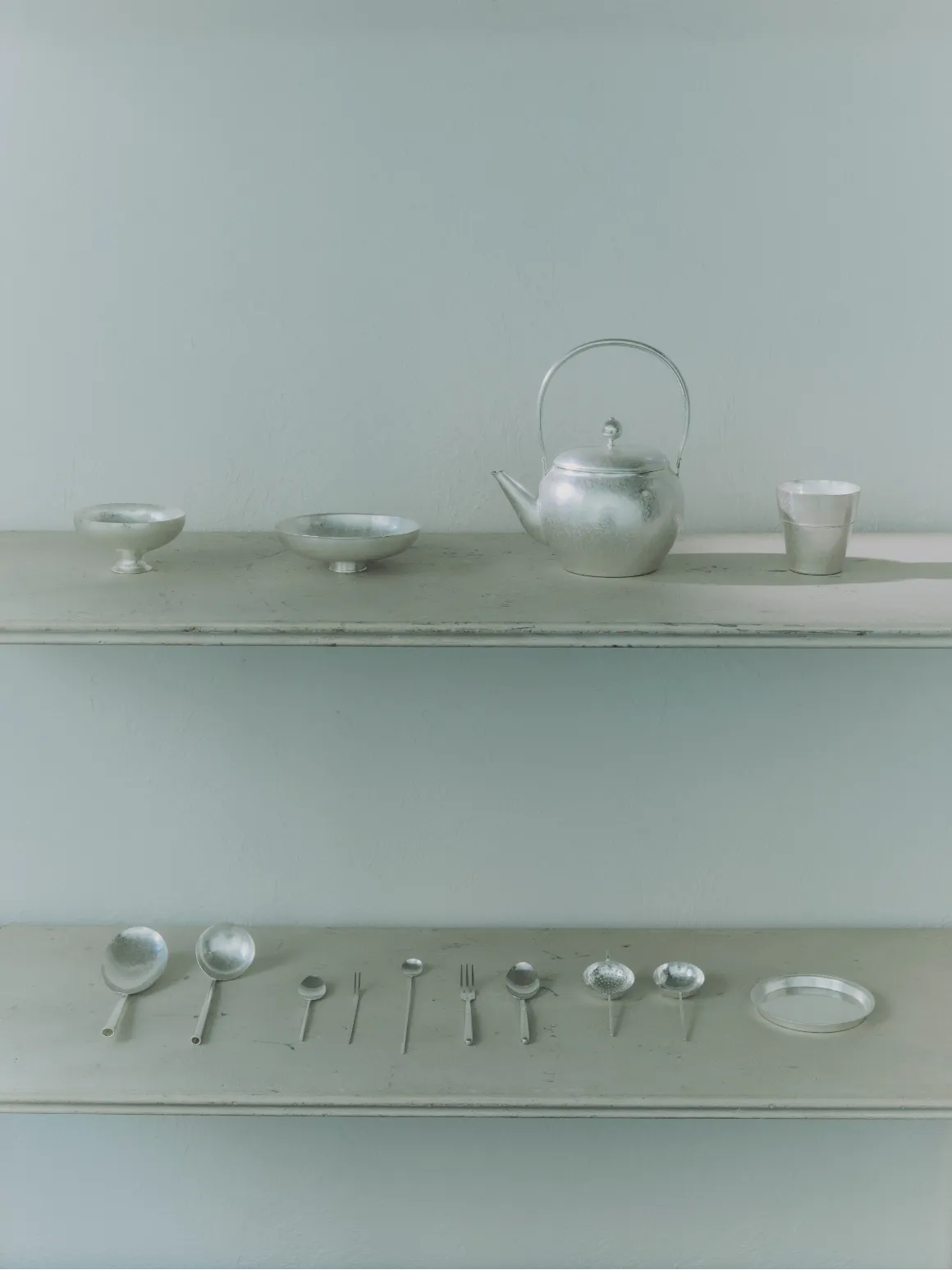
Kamada’s silver creations are inspired by the determination to personally complete each undertaking with her own hands, while realizing works that may be used in our everyday lives.
In the quest for my own unique expression,
fundamentals and techniques are critical elements.
Back when I was not even familiar with the word ‘metalwork,’ I encountered a single silver spoon crafted by my mentor. Utterly charmed by the beauty of that piece, I decided to enter this world. As I continued to train in this field, I realized that there are certain fundamentals and techniques indispensable to realize my own unique expressions. With that, I focused on mastering traditional methods. Although my mentor was a silent type of person, he exposed me to many old and new things. The experience now comprises the base of my own undertakings.
Upon examining works that have survived over the years (from those before the birth of Christ to more modern creations), there is a beauty brought about by eliminating unnecessary details. I have always been genuinely attracted to that sensation. As a result, in my own works I strive to realize items for daily use that continue to be readily and naturally chosen by children even after they grow up.
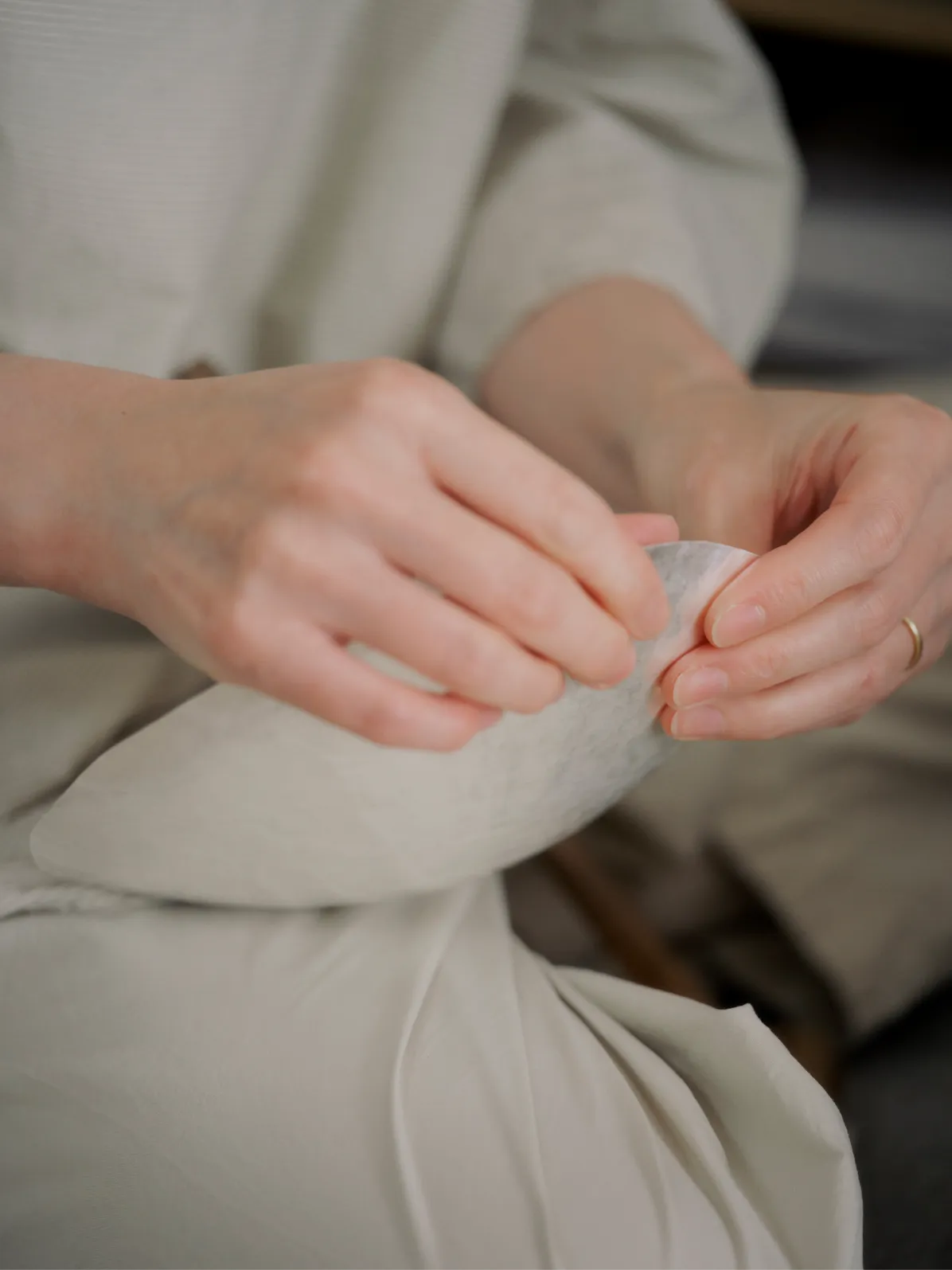
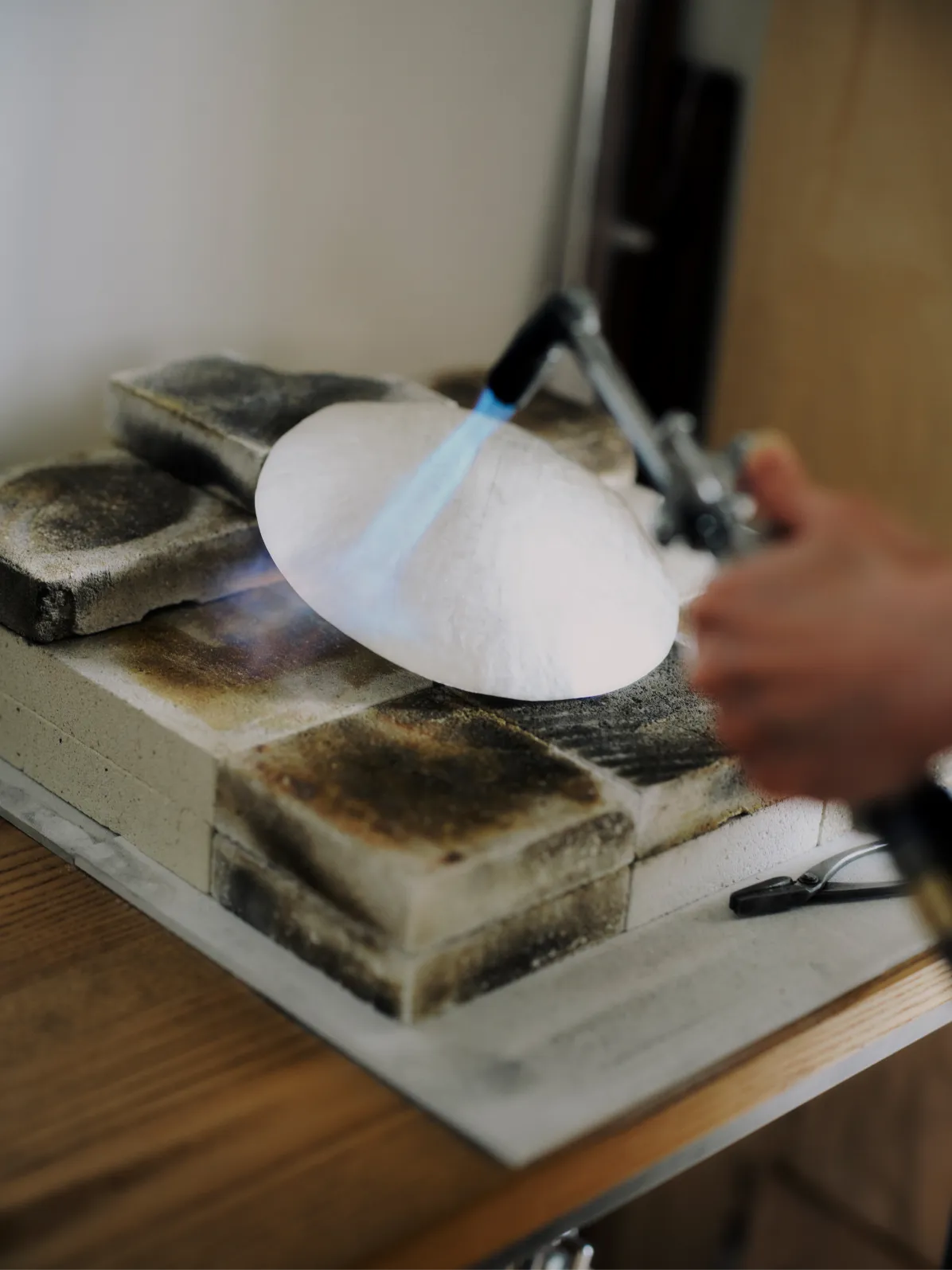
Traditional silverware is generally well-polished and completed with profound details. In my own view, however, when adopting such pieces in our modern lifestyle, there is a need to consider the weight and size, along with texture which avoids the sense of excessive tension. I strive to sublimate that perception in my own special way.
Pure silver, meanwhile, is a substance which shifts in expression with the passage of time. Depending on the maintenance of such pieces, they are apt to change in appearance after 10 years, 20 years, and thereafter. My own mission, therefore, is to craft elements so that such changes will contribute to the beauty of the piece.
With each exhibition, I set my sights on realizing my ideals. Upon completing such creations, however, my thoughts inevitably turn to how much still lies ahead. As I push on with that path, I sincerely hope that I am steadily drawing closer to my envisioned goals.
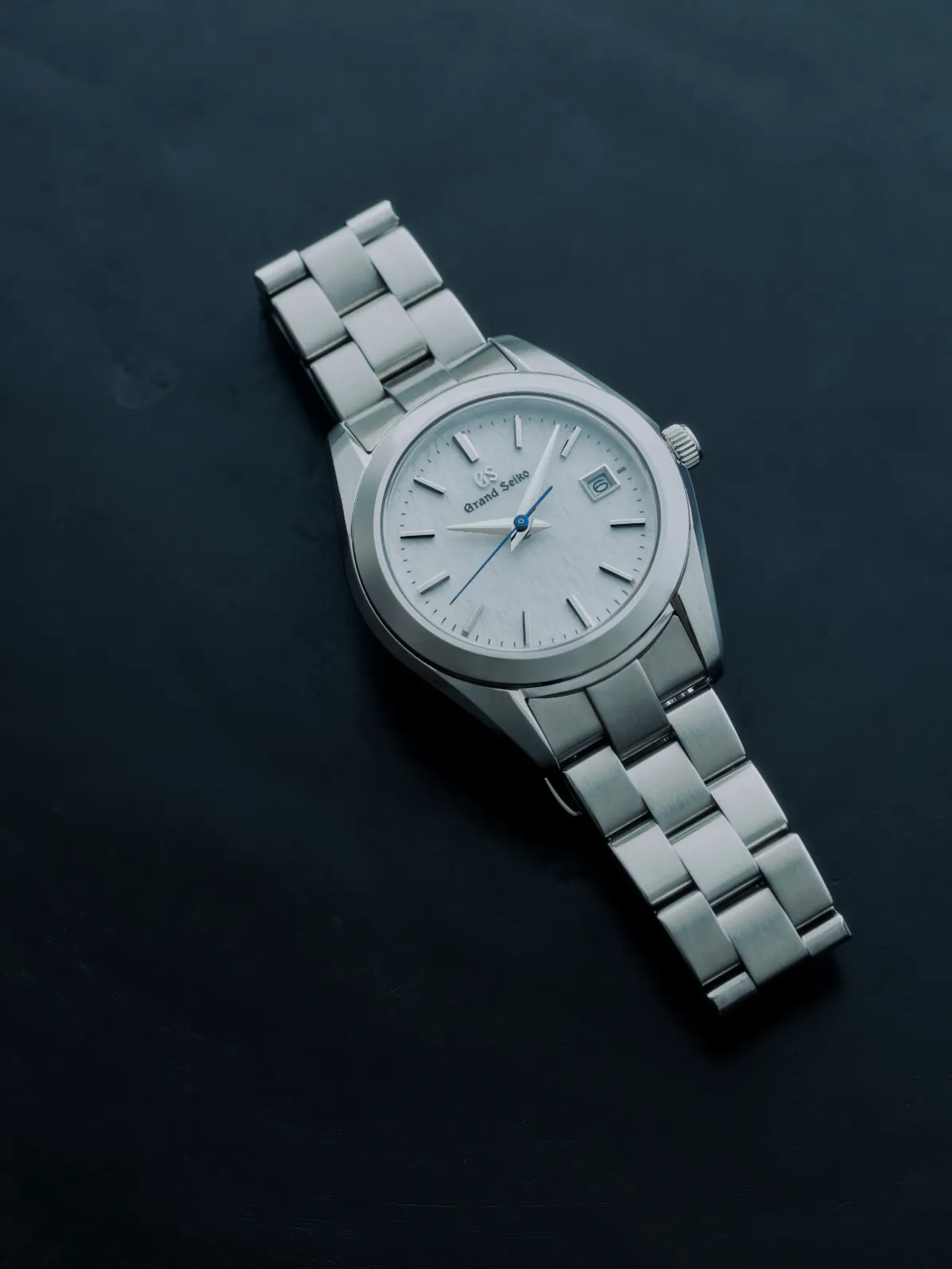
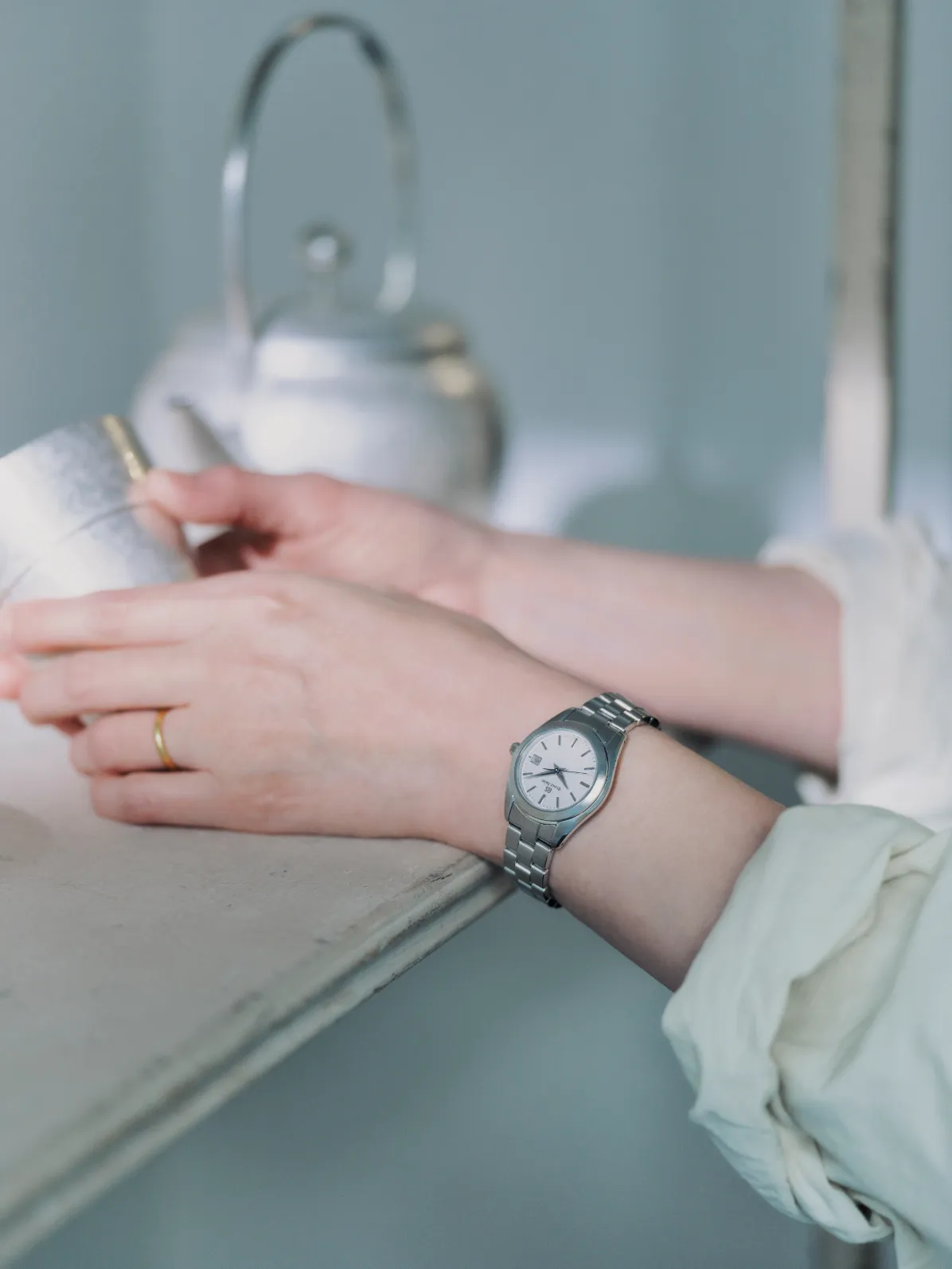
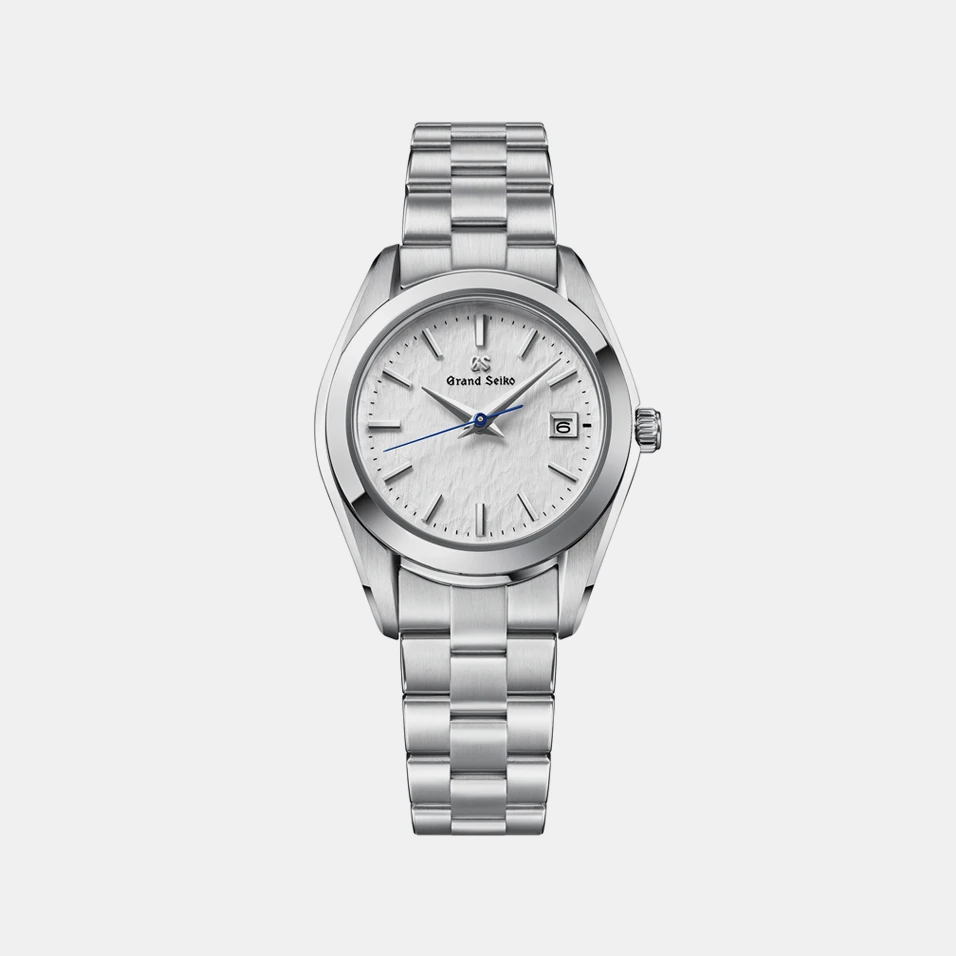
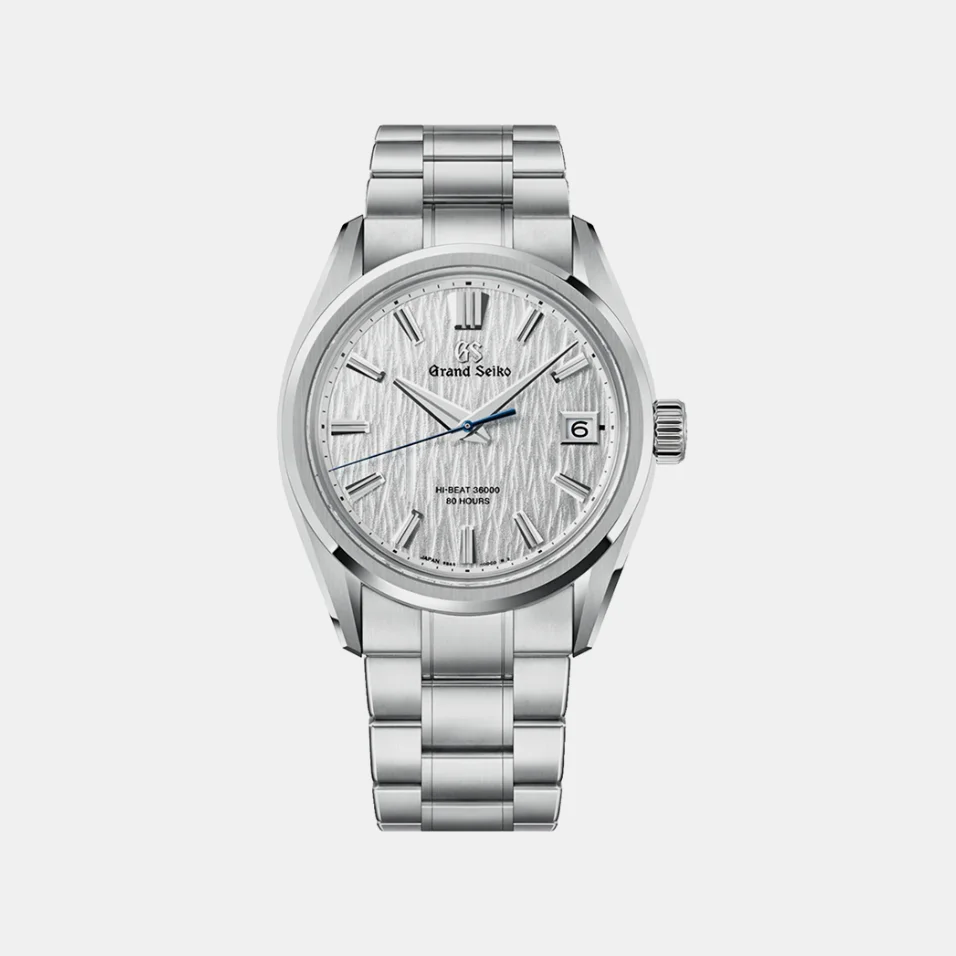
The STGF359 features a dial that expresses snow surfaces carved by the wind. It evokes a white world through specially treated silver plating and is completely free of any white paint. The design fully resonates with the fine and subtle works for which Kamada is famed.
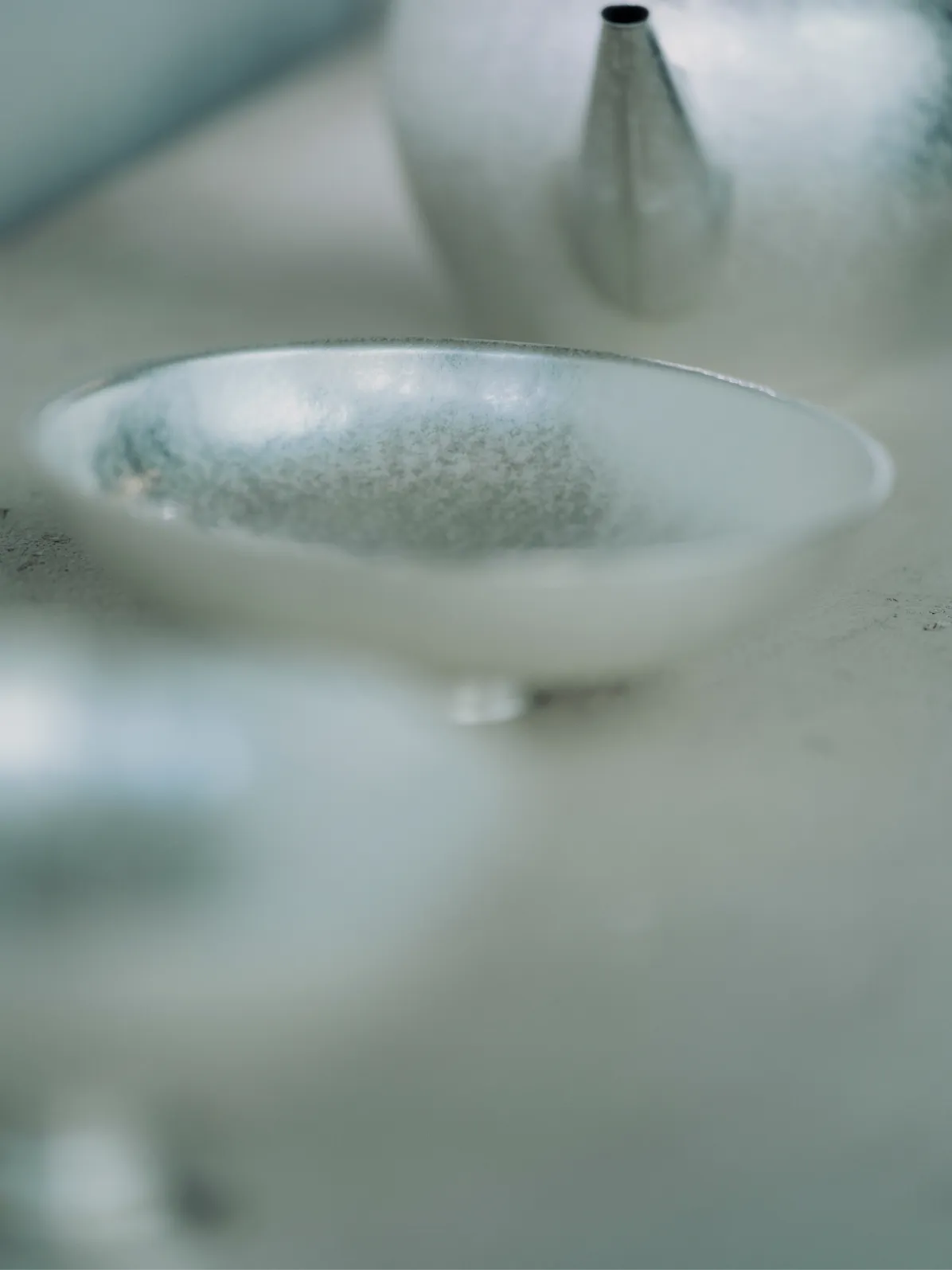
For Kamada, her silverware works are distinguished by soft surfaces emerging in a so-called “sand-like texture.” More specifically, she targets the joys of an aging process in which convex surfaces take on a greater gloss as use proceeds, while concave surfaces grow deeper and more profound in hue.
Metalwork artist
Naho Kamada
A continuous evolution in beauty, from the first-generation Grand Seiko to the present day
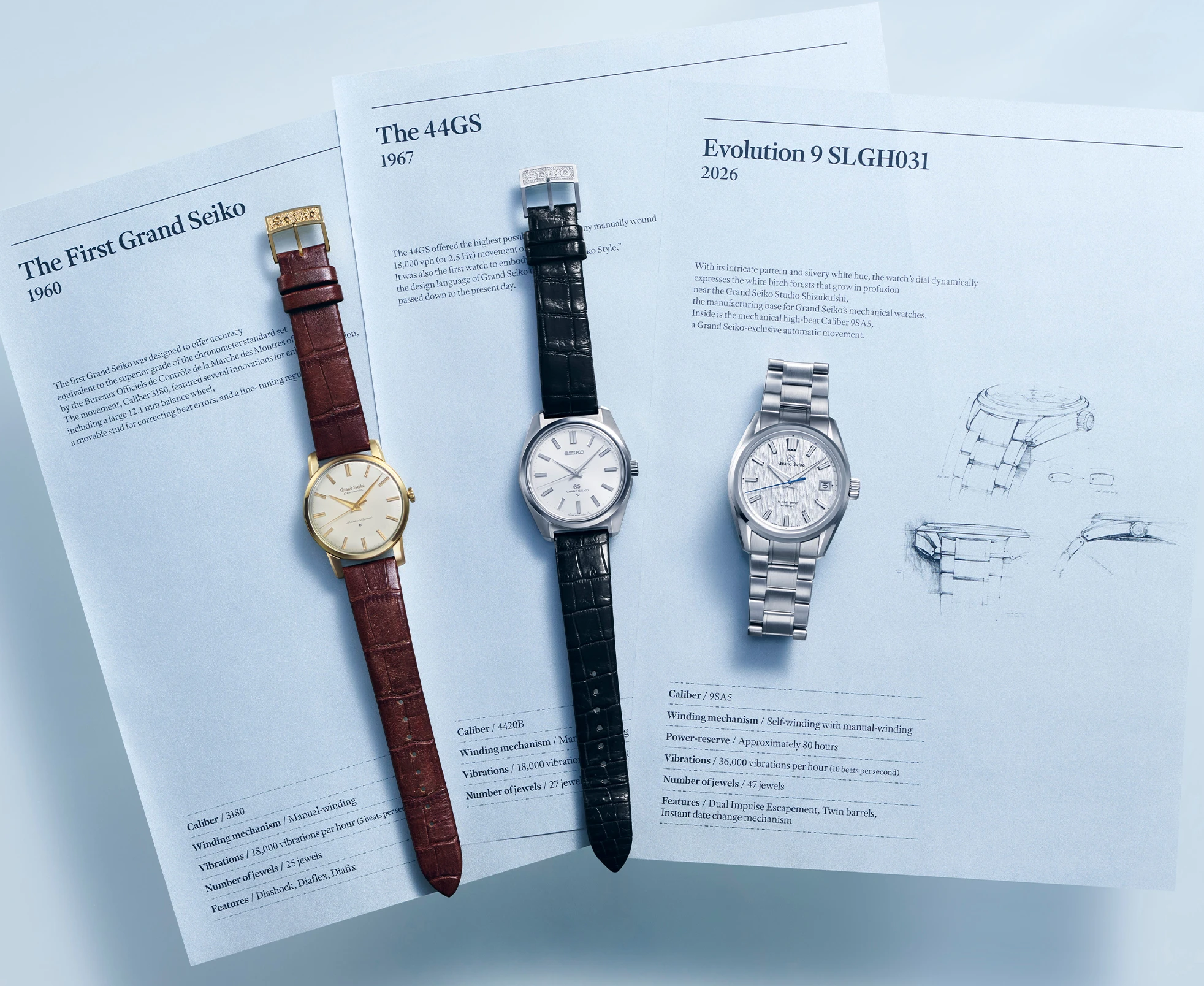
A continuous evolution in beauty,
from the first-generation Grand Seiko to the present day
The first Grand Seiko watch was born in 1960. At the very origins of this timepiece was the unwavering aspiration to craft a world-class wristwatch steeped in unparalleled accuracy and quality.
The 44GS, introduced in 1967, took this philosophy a step further. Guided by the concept of a "brilliantly shining watch" and rooted in Japan's unique aesthetic sensibility, it established the Grand Seiko Style, which continues to the present day.
The contemporary Evolution 9 Style carries on this aesthetic while enhancing its beauty, legibility and wearability, elevating the ideal of the wristwatch to a new level.
Remaining a truly timeless watch—staying true to its founding aspiration while continuing to evolve with the times.
Building on tradition to create that which is new. Therein lies the spirit of craftsmanship alive in every aspect of Grand Seiko.

*Product availability and stock may vary by store.


