02Light & Shadow
Delicate beauty, born of “Light & Shadow.” Simple yet profound, this aesthetic transcends borders and generations, having been passed down through the ages. This distinctive sense of beauty breathes life into the design of Grand Seiko. The dials, indexes and cases of Grand Seiko reflect a philosophy meticulously incorporating not only light, but also the inherent nuances of shadow.


A lineage of
light and shadow,
handed down

A lineage of
light and shadow,
handed down
AKARI
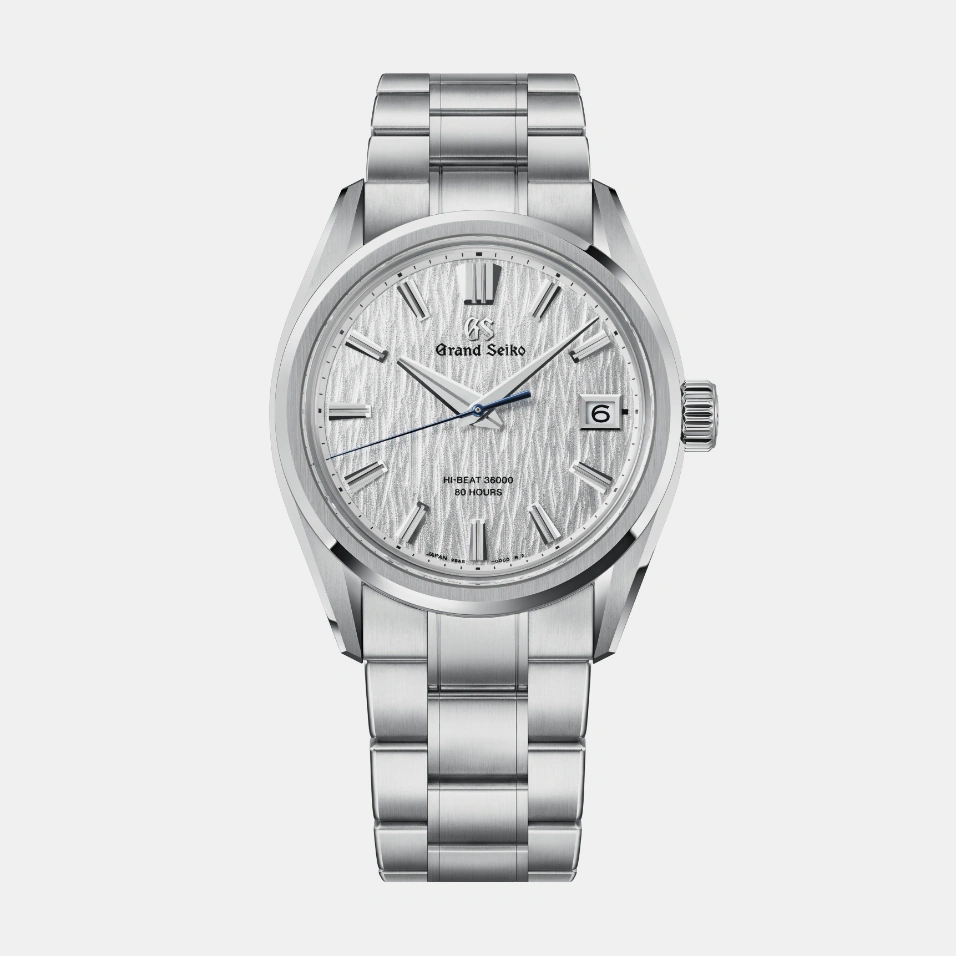
Underlying both the SLGH031, fitted with a dial inspired by the vista of a white birch forest, and AKARI by Isamu Noguchi is an aesthetic sensibility that places light at the center without overstating it. AKARI creates a soft, diffused glow through Japanese washi paper. The Grand Seiko case design portrays richness inherent in the distinctive interplay between light and shadow, which is skillfully used to depict subtle gradation. The finely textured pattern on the white birch dial of the Grand Seiko SLGH031 delicately disperses light, rendering an expression that shifts with the angle of view or the slightest movement.


The SLGH031 case emerges through a combination of a distortion-free mirror surface finish, created with the Zaratsu polishing technique, and an intricate hairline finish. The contrast of these two distinct textures ushers in various different expressions of light, generating a sense of three-dimensional depth for the resulting design.
The brilliance of Isamu Noguchi’s AKARI lies in the fact that it is not merely a “lighting fixture,” but a sculptural expression of light itself. Conventional sculptural works tend to generate shadows through light from the outside, expressing their three-dimensional form. With AKARI, however, the light source itself lies within, and a sense of presence emerges gently into space.
“The light of AKARI is like the light of the sun filtered through the paper of shoji.” described Noguchi. The creation, conceived from the encounter with the technology of the traditional lanterns made in the Gifu region, softens electric light with washi paper, bringing gentle shadows into the space.
As yet another allure of AKARI, we wish to underscore the beauty which emerges whether the light is switched on or off. Made solely from washi, bamboo and thin iron wires, AKARI also reflects Japanese aesthetic ideals such as ephemerality and lightness.
With AKARI placed directly on the floor, the expression of its low center of gravity helps to inject just the right degree of shade and a relaxed atmosphere into the space. When suspended from the ceiling, AKARI also projects the image of a dimly lit cocoon floating in midair. This lighting fixture, an expression of the traditional aesthetic sense of the Japanese people from days of old, notably their esteem for “shadow” and “dimness,” shines as a true masterpiece exceeding the “light sculpture” era known largely for instilling shape into light.
AKARI 120A, 30N+ST2
© 2026 The Isamu Noguchi Foundation and Garden Museum/ARS,
New York/ JASPAR, Tokyo G4207
Manufactured by Ozeki & Co., Ltd.

How High the Moon
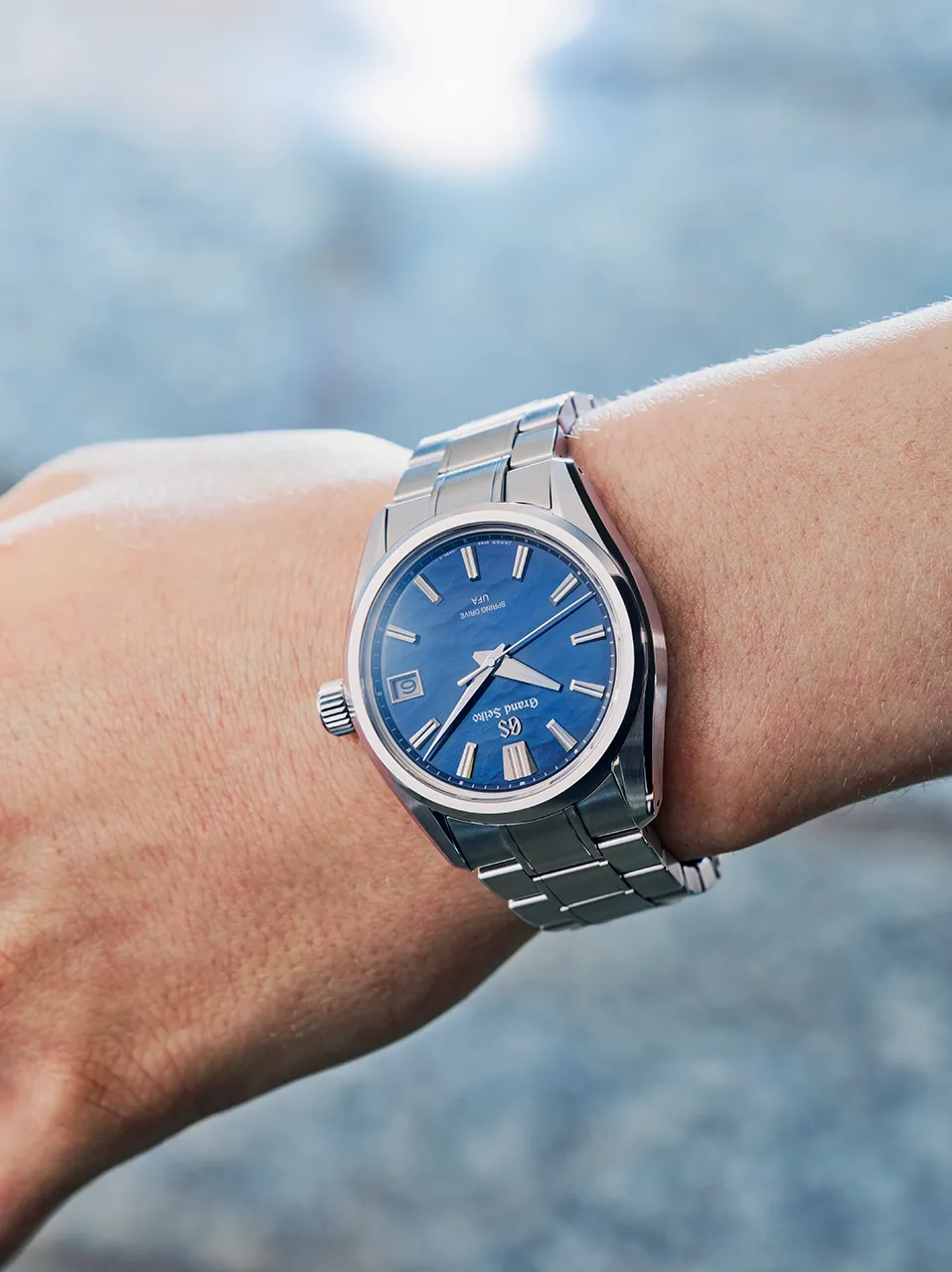
The SLGB013 timepiece, inspired by the surface of Lake Suwa moving in a gentle breeze, and the How High the Moon armchair created by Shiro Kuramata. These two objects share a departure from fixed shape, interacting with the light in the given environment. While Kuramata’s How High the Moon is in fact a chair, it has been crafted with highly transparent materials to avoid any strong assertion of its physical presence. Rather than the armchair itself, therefore, the overlapping of the reflection of light, and the projection of its shadow on the floor and the surrounding scenery, infuse a distinctive recognition of its shape. This concept likewise thrives in the Grand Seiko Lake Suwa dial. This dial pattern, crafted to reflect the vast waters of Lake Suwa, shifts in expression each time it is struck by light. Much like the actual waters, it projects the image of gentle swaying in the passing breeze. The hour and minute hands and indexes, featuring multifaceted cuts, reflect the light – the result of being crafted to radiantly sparkle – while maintaining high legibility and generating a bright and beautiful expression.


The SLGB013 timepiece features a dial instilled with soft shadows in the motif of the surface of Lake Suwa in Shinshu. In tandem with the glide motion of the Spring Drive seconds hand, it conjures images of the passage of time in the tranquility of a lakeside setting.
The late Shiro Kuramata, active from the 1960s through 1991, was a designer and artist who achieved international acclaim. His “How High the Moon” armchair was introduced in 1986, at the height of his fame. Its name was drawn from the jazz classic of the same title, a reflection of his love for that musical genre.
The materials used in this futuristic furniture creation consist of expanded metal mesh found in building materials and fences – commonly known as “expanded metal.” While an unusual combination of industrial materials was featured in the formation of this traditional armchair, the chair itself sparkles in a silver hue when struck by light. Depending on the angle from which it is viewed, the chair’s expression shifts as a result of the overlapping of the wire mesh.
Elaborately finished by sophisticated craftsmanship, the chair is robust despite its delicate mesh structure. There is no frame, unlike conventional armchairs, with the creation exuding a strange aura in which the overall translucent form blends into the background. No less important is the existence of shadows generated by the chair on the floor and wall. Perhaps, the shadows help build a strong sense of recognition of the chair’s actual volume and shape.
This armchair, designed by incorporating light and shadow, gives form to the intangible, much like music or memory. In other words, this is an expression of the “Liberation from Gravity” that lies at the heart of Kuramata’s designs. Instilled with a thorough commitment and unique philosophy, the originality of this piece, which subverts the traditional concept of the chair, comprises a dimension of art clearly exceeding that of design. It projects an unshakable sense of presence as a “device” created to savor the experience of light and shadow.
Text by Taka Kawachi
How High the Moon © Kuramata Design Office
Courtesy of SEMPRE
Courtesy of GALLERY TAMURA JOE


Daniel Buren, The Colors Suspended: 3 Exploded Cabins,
work in situ, Toyota
Municipal Museum of Art, 2003.
© DB - ADAGP, Paris & JASPAR, Tokyo, 2026 G4207

Technology & Spirituality

Light & Shadow

Nature & Emotion

Heritage & Innovation