




Pursuing Three Goals at this Special Place for Grand Seiko
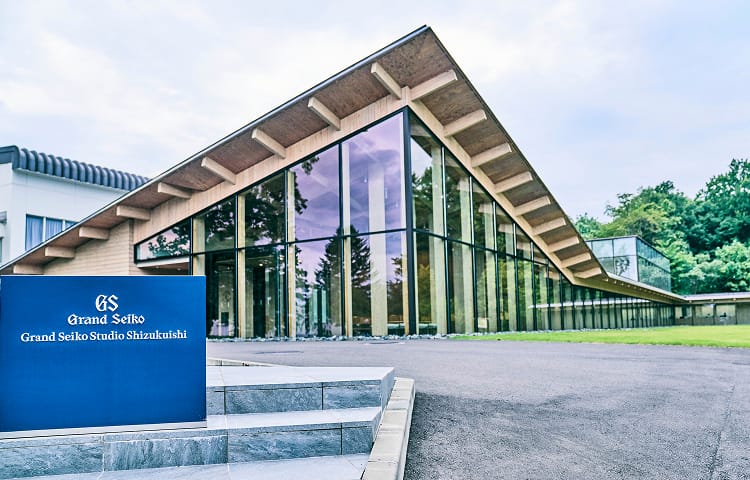
Grand Seiko has perennially set its sights on creating the finest timepieces. This encompasses the pursuit of precision, legibility, durability, beauty, and other essential elements at the highest levels, continuing to earn attention around the world as a truly global brand. To commemorate the 60th anniversary of this mission, the Grand Seiko Studio Shizukuishi was built in 2020. A specialized studio positioned as the production base for mechanical watch models emerged at Morioka Seiko Instruments Inc. in Iwate Prefecture, taking charge of the assembly and adjustment of Grand Seiko’s mechanical timepieces. Now, five years after the start of operations at this site, a studio steeped in the wonders of nature displays its might, and expectations and importance are growing.
Yukinori Kato, Vice Chairman of the Board of Morioka Seiko Instruments, reflects on the start of this endeavor:
“In the early days, we were determined to establish Grand Seiko as an exclusive independent brand, and expand overseas on the strength of that status. This was rooted in our judgment that, in order to earn recognition in the global marketplace, we needed to build an exclusive studio that could clearly demonstrate that Grand Seiko’s craftsmanship was distinct from that of other watches.”

Three basic goals were outlined. First, empower all employees to perform their work in a liberated state of mind. Second, enable visitors to tour and experience the work underway there, free of stress or tension. Third, contribute to raising the prestige of the Grand Seiko brand.
Selected to oversee the design of this facility was Kengo Kuma, one of Japan’s foremost architects. Mr. Kuma readily agreed to undertake this task, based on his endorsement of the Grand Seiko brand philosophy, “The Nature of Time.” The idea Mr. Kuma proposed came as quite a surprise to the managers who commissioned the project. The renowned architect envisioned a spacious wooden cleanroom – a concept virtually unheard of in the world.
Notes Vice Chairman Kato:
“There was considerable concern that this posed a truly tall hurdle. Here again, however, the prevailing sense of trust and devotion carried the day. The result was, in fact, a wooden cleanroom completed on the strength of stellar design and implementation technology. The tall ceiling and spacious window area contribute to a brightly lit interior, while likewise enabling workers to bask in the rich scenery of Mt. Iwate and other lovely aspects of the natural setting. In Switzerland, it is my understanding that the cleanrooms used in timepiece manufacture tend to be relatively small, reflecting the importance attached to concentration on individual work duties. With this facility, in contrast, we strove to instill a sense of freedom and the ability to engage in communication more closely attuned to the Japanese character, thereby ensuring an effective teamwork environment.”
Within the studio, therefore, work desks are arranged in an orderly fashion, enabling employees to focus on their respective assignments. From time to time, however, they will gather with their colleagues in meetings to discuss and share ideas. This amounts to a total change of pace from conventional cleanrooms, in which the aforementioned image of closed-off spaces tends to prevail. That feature conveys the palpable sensation of space conceived to encourage and support a free and natural workflow.


These touches blend to immaculately achieve the second main objective – an atmosphere ensuring maximum hospitality for visitors. Those arriving here on tours first view the displays set up at the entrance. This includes the history of the brand, movement mechanisms, and how people are involved in the parts produced here and their assembly operations. After this, they enjoy a close-up view of the work underway through the glass windows of the long hallway, while also gazing out over beautiful Mt. Iwate.
Notes Vice Chairman Kato:
“Visitors can see the full range of Grand Seiko craftsmanship, while later having the opportunity to directly touch and examine finished products. We have taken particular care to actively incorporate the natural setting of Iwate Prefecture and the four distinctive seasons of Japan into this process, and explain how these factors merge to forge our brand value. When viewing the watches assembled here, visitors can readily appreciate the details of the process as it proceeds. Our ultimate goal, naturally, is to work through such experiences to win over all visitors here as loyal Grand Seiko fans. In that quest, rather than welcoming large numbers of visitors all at once, the strategy is to limit the flow of guests, enabling them to leisurely view the process and deepen their understanding and impressions.”
This approach can be said to steadily contribute to the third previously stated basic goal – raising the brand’s prestige to the next level.
A Studio Built to Harmonize Engineering and Nature, Setting our Sights on the Future
In undertaking the design, architect Kengo Kuma reported that he drifted into the mindset of “performing my work deep in a forest.”
Noted Mr. Kuma:
“Upon visiting the planned construction site, my first impression was of having ventured into a vast geographical flow from Mt. Iwate. I soon realized that the most important aspect was not to approach the building as an isolated unit. It was vital, rather, to consider the integral ties with the surrounding terrain. Within that landscape, meanwhile, was a forest. There is also recent research about how human beings originally dwelled in forests, following lifestyles closely linked to the trees. This stimulated the brain, causing people to become wiser in their thoughts. That can also be said to apply to so-called ‘emotional richness.’ Taking this to heart, I arrived at the concept of once again inspiring such primitive human conditions and mindsets.”

Besides the building itself, this philosophy may also be applied to the wooden structure of the cleanroom.
According to Mr. Kuma:
“My perception of Grand Seiko timepieces consists of a prevailing sense of balance formed by the soft and hard qualities of engineering as craftsmanship, along with a fond embrace of the natural world. This, in essence, is what I decided to target in this construction project. The human race, as we know, progressed through the 20th century on the strength of industrial endeavor. However, with the emergence of certain limits to this approach, the question has emerged of how to ensure a constructive balance between engineering and nature going forward.
“In my view, Japan, as a nation that has effectively built up a culture rooted in the wisdom of nature, now faces the need to further rise to this challenge. Cleanrooms are one example of that mission. Pooling the wonders of the world’s oldest wood structures, for which techniques were cultivated from the 7th century, along with the aroma and other aspects of wood, the high caliber of Japanese engineering shines through in all of its grandeur. In my view, the essence of what we must do lies in truly mastering the art of engineering, in the quest to draw closer to the essence of the natural world.”
Mr. Kuma smiles as he continues: “The standard, when all is said and done, is whether I myself would want to work there, effectively transforming that environment into my own special place.”
He speaks of an increasing sense of his over the past five years: “Our very future clearly lies in achieving symbiosis with nature, with architecture also moving in that direction.”
“We must strive to design the essence and mood emerging from the status of modern architecture, along with the time involved in that process. Before considering the exterior appearance, for example, we need to consider how best to use the raw materials involved. For example, how they will eventually be recycled, while designing an all-encompassing ‘circulation saga.’ Without such efforts, we will come up short in the quest to persuade the world of the wisdom of this route. When it comes to sustainability, there is now much talk about the statistical challenges of carbon dioxide, global warming, and other issues. In my view, however, the most important aspect involves the question of how to bring human beings together in this overall quest. In that sense, architectural excellence provides one such monument and imagined landscape toward that end. This amounts to what may be labeled ‘sustainability of the heart,’ with neglect of that aspect threatening to eliminate the significance of all forms of architecture.”
Cultivating Workers to Live in Harmony with Nature and Carry on Craftsmanship


The sprawling greenbelt visible from the studio also contains a rich biotope zone containing an “insect hotel” designed and supervised by Kengo Kuma & Associates.
According to Vice Chairman Kato:
“We invite local elementary school students here for nature viewing sessions, along with fun timepiece learning and environmental classes. Including these and other efforts, we work through the “Toki-iku” initiative organized by the extended Seiko Group to support the growth of children who will shape the future. We are confident that this makes a small but meaningful contribution to the local community. When all is said and done, it is vital to work and grow together with the region.”
In this way, the studio does not function as an independent entity, but rather as a key part of Morioka Seiko Instruments. The positioning of these efforts as one phase of environmental education also supports the company’s recruiting activities. In fact, it was surprising to learn that over 90% of the company’s current workforce of 700 or so employees grew up here and were hired locally.
“We are devoted to continuing to build fine timepieces at this location over the next 50 to 100 years. To succeed in this quest, the most important thing is to tirelessly pass on the necessary technology and craftsmanship. This involves mobilizing local people, born and raised here in these rich natural surroundings, to carry on and further enhance the manufacturing excellence.”

We were able to speak with three young watchmakers who have continued to study and master the technology needed to succeed in this environment. All three were assigned here upon the launch of the studio, and have continued to evolve hand in hand with the facility ever since. One of them is Yuta Ono, currently in charge of movement assembly. A graduate of an industrial high school in Iwate Prefecture, Yuta developed an interest in mechanical watches early on. Visiting the company on a tour, he was entranced by the sight of watchmakers at work and determined to work here.
“After joining the company, I was assigned to the “skill development” division with the goal of competing in the National Skills Competition of Japan. That turned out to be a truly precious experience, and I currently take great pride in being able to perform and excel at the type of work I envisioned from before.”
Yuta notes that working at the studio brings him into close contact with the natural environment that he loves, enabling him to relax and concentrate. He is also pleased with the workplace itself, where craftsmen join to share ideas and work to raise their respective levels of experience.
Accuracy adjustor Arata Nozaka also grew up in the area, and decided to join the company after touring the facilities.
“Although I graduated from a commercial high school, I was entranced when I viewed the manufacturing facilities here and became determined to become an accomplished craftsman. While accuracy adjustment work was totally new to me, I soon learned that I would be serving with “Meisters,” winners of the Medal with Yellow Ribbon (a national excellence award), as well as contemporary master craftsmen. I was assured that I could consult with such experts when encountering doubts or other challenges.”
Arata explains how workers in the same group are also free to consult and communicate with craftsmen from different generations and fields, contributing to a lively and satisfying workplace environment.
Yuki Okubo, meanwhile, handles the hour and minute hand attachment phase of the timepiece casing workflow. Among these three craftspersons, she is the only graduate of a watchmaking school.
“I chose to work here based on its appeal as a site engaged in wristwatches, recognized as a leader on a global level. Hand attachment is work that follows the assembly and adjustment of movements by my coworkers. Failure at this phase imperils the work performed up to that point, generating the need to closely concentrate on the process.”
In her work to date, Yuki has attached the hands to virtually all types of Grand Seiko watches shipped from this facility. But even so, she reports she still experiences nerves, yet another indication of the strong sense of responsibility she feels in supporting this work. She smiles as she recalls feeling a bit nervous at being viewed by tour visitors through the windows above.

After spending five years at this studio, each one of the three craftspeople is looking to set new goals. Yuta Ono, for example, wants to attain the highest ranking in the in-house Meister system and then perform assembly demonstrations for those outside the company to further raise the brand’s prestige. His ultimate goal is to earn the Medal with Yellow Ribbon award. Arata Nozaka has his sights set on earning the highest rank in the in-house Meister system. He wants to absorb all possible knowledge from the Meisters under whom he currently serves, continuing to polish his craftsmanship. Yuki Okubo, meanwhile, is determined to emerge as one of the few female Meisters in this field. She explains how she wants to compile both the knowledge and experience needed to excel in an even greater range of work.
The Grand Seiko Studio Shizukuishi is a site devoted to operating in harmony with nature. In the same spirit, every possible effort is made to cultivate precious human resources, in striving to pass the spirit of technology and craftsmanship on to the next generation. In that sense, the past five years have been little more than a stepping stone along the way.
Tireless Efforts by Seiko Group Employees to Preserve “Hiraniwa Plateau”


Grand Seiko is a brand devoted to the theme of “Living in Harmony with Nature.” True to this mission, in 2021 a comprehensive partnership agreement was signed by Seiko Watch and Morioka Seiko Instruments with Iwate Prefecture to advance cooperation toward regional revitalization and realize a sustainable local community. One of the activities in pursuit of this vision is the planting of white birch trees in the vast Hiraniwa Plateau located in the Kuji City area of Iwate Prefecture. Today, more than 310,000 white birch trees are growing there, earning this area the distinction of “Japan’s Most Beautiful White Birch Forest.”
In August 2025, environmental improvement activities were conducted in combination with the “Kuji Lab” local volunteer group. This has involved collaboration between our employees, local citizens (including elementary and middle school children), and local company volunteers in planting and cleanup operations, with everyone enjoying the rich interaction with nature. Cooperating with local residents in the quest to cultivate forests leading to a brighter future is a true manifestation of the Grand Seiko devotion to achieving harmony with nature.
- Text: Mitsuru Shibata
- Photo: Tetsuya Niikura


